Why Is Your Garage Door Noisy? Common Causes, Solutions and DIY Maintenance
A noisy garage door is not always a sign that the opener needs replacing. The noise may come from the motor, drive mechanism, door rollers, hinges, springs or tracks. Identifying where the sound originates is the first step towards finding the right solution.
In general, garage door noise can be divided into two main categories:
- Garage door opener noise – noise generated by the motor and its drive mechanism.
- Garage door noise – noise generated by the door itself as it moves along the tracks.
Understanding the difference can help you avoid unnecessary repairs and identify when professional servicing is required.
- Garage Door Opener Noise
The type of noise produced by an opener often provides clues about the underlying problem. Older openers, worn drive components and loose mounting hardware are common causes.
1.1 Motor Noise
Symptoms: A humming, buzzing or mechanical whirring sound while the opener is running.
Older garage door openers, particularly those fitted with AC motors, can be noticeably noisier than newer models. Some motor noise is normal, but excessive or worsening noise may indicate wear or an electrical problem.
Possible causes include:
- Age-related motor wear: Bearings and other internal components may deteriorate over time, increasing vibration and noise.
- Electrical problems: A failing capacitor or another electrical fault may cause humming, difficulty starting or reduced motor performance.
- Excessive door resistance: If the door is difficult to lift because of poor balance or mechanical binding, the opener may work harder and produce more noise.
Recommended solution:
First, check whether the door moves smoothly when operated according to the manufacturer’s manual and whether there are any obvious obstructions. If the opener hums but does not move the door, stop operating it and arrange a professional inspection.
Capacitors, electrical components and internal motor parts should be inspected by a qualified technician. Lubrication will not resolve a defective capacitor or worn motor bearings.
If an older opener has become consistently noisy and requires expensive repairs, replacing it with a modern, quieter model may be more economical.
1.2 Worn Drive Gear or Shaft Components
Symptoms: Grinding, clicking, rattling or irregular mechanical noise during operation.
Many openers use internal gears and shafts to transfer power from the motor to the drive mechanism. With age and repeated use, these components can wear.
Depending on the opener design, excessive wear or looseness may cause:
- Grinding or clicking as the gears engage.
- Rattling or vibration inside the opener housing.
- Irregular movement or slipping of the drive mechanism.
- Increased noise when the door starts or changes direction.
Recommended solution:
A technician should inspect the internal drive components and determine whether the affected gear, shaft or associated parts can be replaced.
Lubrication may help where the manufacturer specifies lubrication, but it cannot restore worn teeth, damaged shafts or excessive mechanical clearance.
If replacement parts are unavailable or the repair cost is disproportionate to the value of the opener, replacing the opener may be the better long-term option.
1.3 Loose Opener Mounting Bolts or Brackets
Symptoms: Vibrating, rattling or buzzing that becomes louder when the opener starts or stops.
The opener’s mounting bolts, brackets and supporting structure can loosen over years of operation. When the motor runs, vibration may be transferred through the mounting hardware into the ceiling or surrounding structure.
Recommended solution:
- Check for visibly loose or damaged mounting hardware.
- Inspect the opener brackets and ceiling supports for movement or damage.
- Have suitable fasteners tightened and damaged supports repaired.
Homeowners can visually inspect accessible mounting points, but should not work from an unstable ladder or attempt to reposition a suspended opener without suitable support.
Tightening loose hardware may solve the problem without requiring a new opener.
1.4 Chain Noise and a Worn Drive Mechanism
Symptoms: Metallic rattling, scraping or a chain striking the rail or the top of the garage door.
Chain-drive openers naturally produce more mechanical noise than many belt-drive systems. However, excessive noise may indicate that the chain is too loose, improperly adjusted or contacting another component.
Possible causes include:
- Excessive chain slack.
- Worn sprockets or drive components.
- Misalignment of the drive rail.
- Incorrect chain tension.
- Vibration transmitted through the mounting brackets.
Recommended solution:
Inspect the chain and rail visually while the opener is switched off. Look for obvious contact marks, excessive sagging or damaged components.
Chain tension should be adjusted only according to the manufacturer’s instructions. An overtightened chain can increase wear on the sprockets, shaft and bearings.
Use only the lubricant specified for the particular opener. Some chain systems require periodic lubrication, while others have different maintenance requirements.
If the chain continues to scrape or the drive mechanism is worn, professional adjustment or component replacement may be necessary.
1.5 Trolley Noise and Friction Along the Rail
Symptoms: Clicking, squeaking, scraping or rattling as the trolley travels along the opener rail.
The trolley connects the opener’s drive mechanism to the garage door. Depending on the design, worn trolley components, damaged guides, loose connections or friction along the rail can create noise.
Recommended solution:
- Check for visible damage to the trolley and its connection points.
- Inspect the rail for debris, damage or obvious misalignment.
- Follow the manufacturer’s lubrication instructions for the relevant contact points.
Do not apply lubricant indiscriminately to the rail. Some systems use specific trolley materials or require particular lubrication practices.
If the trolley is worn, cracked or no longer engages correctly with the drive mechanism, replacement is generally preferable to temporary lubrication.
1.6 When Should You Replace a Noisy Opener?
An opener may be a candidate for replacement when:
- Internal gears, shafts or motor bearings are significantly worn.
- The opener repeatedly fails or makes abnormal electrical noises.
- Replacement parts are unavailable.
- The drive mechanism is damaged beyond economical repair.
- The opener lacks safety features appropriate for continued use.
- Repair costs approach the cost of installing a suitable new opener.
A noisy opener does not automatically need replacing. Correct diagnosis can sometimes resolve the problem with a relatively minor repair.
- Garage Door Noise
Noise can also originate from the moving door, even when the opener is working correctly.
Common sources include torsion springs, bearings, rollers, hinges, tracks and door panels.
2.1 Torsion Spring Noise
Symptoms: Squeaking, creaking, rubbing or occasional popping sounds as the door opens or closes.
Torsion springs store energy to counterbalance the weight of the door. As the spring winds and unwinds, friction between the coils or at contact points may produce noise.
A small amount of spring noise can occur during normal operation. However, a sudden increase in noise, visible spring damage or a door that becomes unusually heavy may indicate a problem.
Recommended solution:
A garage door technician can inspect the spring assembly and apply an appropriate lubricant where specified by the manufacturer.
Never attempt to tighten, loosen, adjust or remove a torsion spring yourself. Springs remain under substantial tension and can cause severe injury.
A broken spring, damaged spring fitting or improperly balanced door requires professional attention.
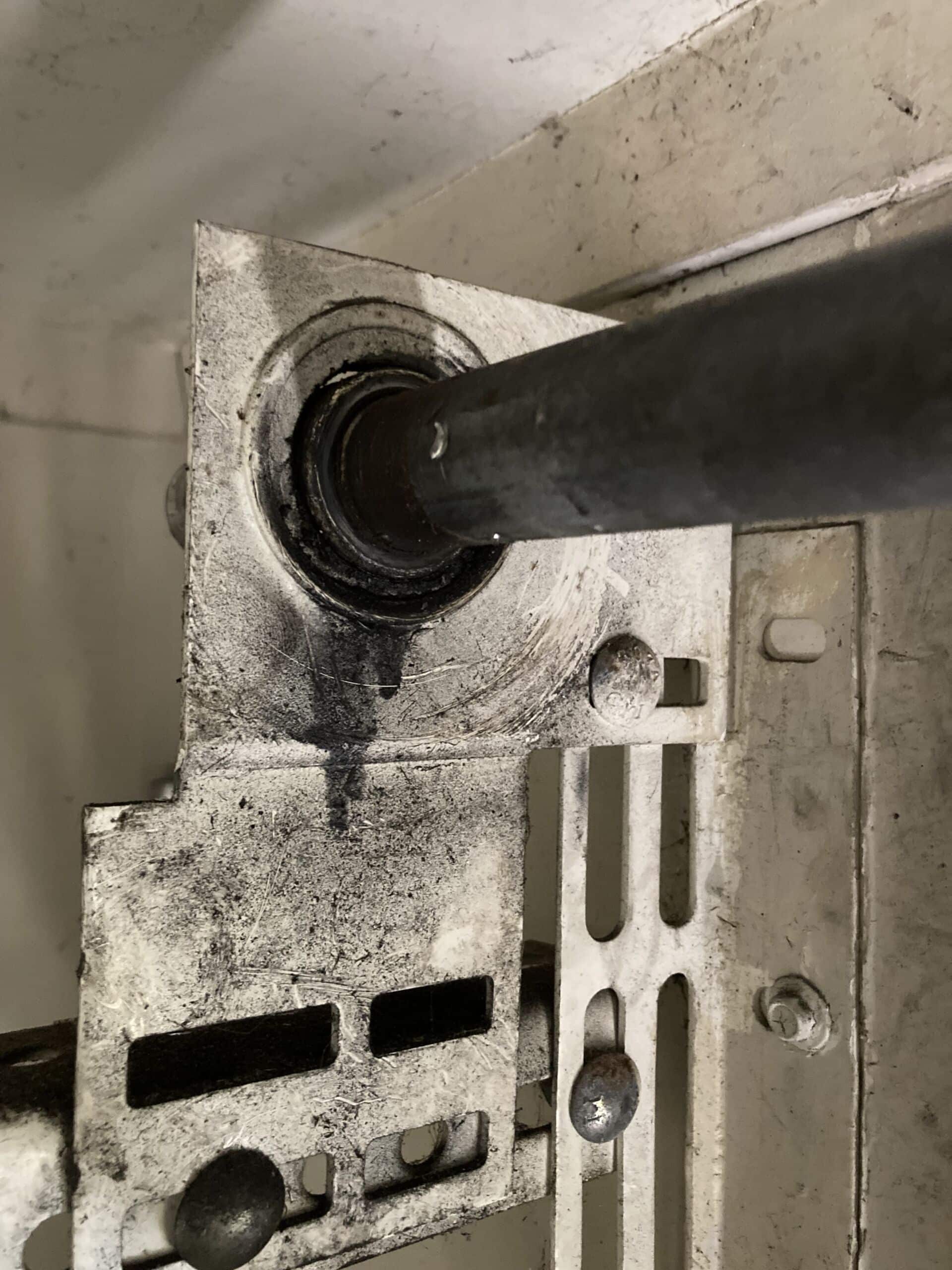
2.2 Torsion Shaft Bearings and End Bearings
Symptoms: Grinding, squealing or rough rotational noise near the ends of the torsion shaft or above the centre of the door.
Bearings support the rotating shaft and allow the spring assembly to operate smoothly. Worn, contaminated or damaged bearings can become noisy as the shaft rotates.
Recommended solution:
A technician should inspect the bearings, shaft alignment and associated brackets. If a bearing is worn or damaged, replacing it is usually the appropriate repair.
Lubrication may temporarily reduce friction in some bearing designs, but it will not restore a damaged bearing or correct shaft misalignment.
Because the assembly is associated with the torsion spring system, bearing replacement should be carried out by a qualified garage door technician.
2.3 Side Roller Noise
Symptoms: Squeaking, rattling, grinding or a rough rolling sound as the door moves through the tracks.
Rollers guide the door along its tracks. Noise may develop because of:
- Worn or damaged roller wheels.
- Worn or contaminated roller bearings.
- Bent roller stems.
- Dirt or debris inside the tracks.
- Poor track alignment.
- Excessive contact between the roller and track.
Recommended solution:
First, inspect the tracks for visible dirt or debris. Clean the track surfaces with a suitable cloth and avoid leaving a thick layer of grease inside the tracks, where it can collect dust and grit.
If the roller wheels are intact and the manufacturer permits lubrication, a suitable garage door lubricant may be applied sparingly to the appropriate moving components.
Sealed roller bearings generally cannot be restored by spraying lubricant onto the outside of the wheel. If the bearing is worn, rough or noisy, replacing the roller is usually the better solution.
Do not loosen the bottom roller brackets. These brackets may be connected to the door’s lifting cables and are exposed to dangerous spring tension.
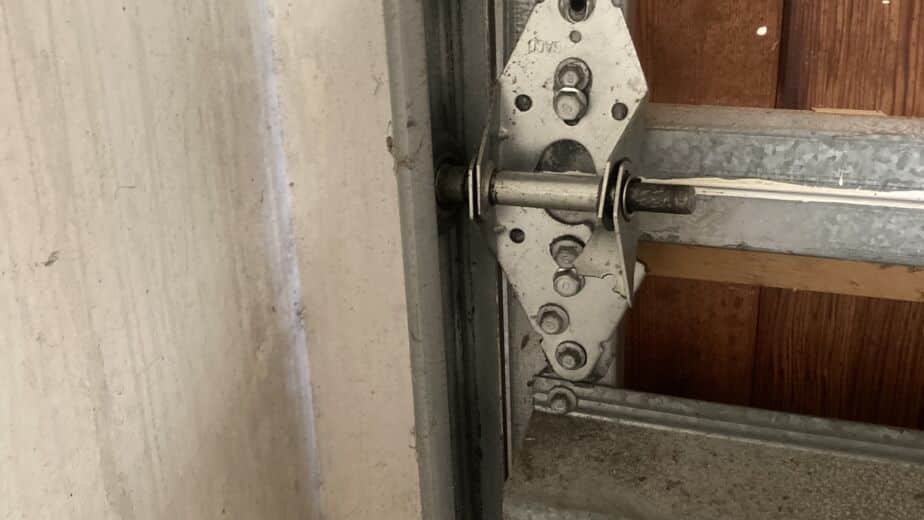
2.4 Hinge Noise
Symptoms: Squeaking, creaking or clicking as the sectional door bends around the curved section of the track.
Hinges connect the individual door panels and allow them to articulate as the door travels. Dirt, corrosion, worn pivot points or loose fasteners can create noise.
Recommended solution:
- Inspect the accessible hinges for damage or obvious looseness.
- Clean dirt from the hinge area.
- Apply a small amount of suitable garage door lubricant to the moving pivot points if recommended by the manufacturer.
- Arrange replacement of hinges that are cracked, bent or significantly worn.
WD-40 Multi-Use Product or CRC products may reduce noise temporarily in some applications, but the correct product depends on the component and manufacturer’s recommendations. A dedicated garage door lubricant is generally preferable for routine maintenance.
Never remove hinge or roller fasteners that support a loaded door panel unless the door is properly secured and the work is within your competence.
2.5 Door Rubbing Against the Side Tracks
Symptoms: Scraping, squealing or a rubbing sound on one side of the door, sometimes accompanied by visible marks on the track or door edge.
This may occur when the clearance between the door and track is too small, or when the tracks, rollers or door panels are misaligned.
Possible causes include:
- Tracks installed too close to the door.
- Bent or distorted track sections.
- Loose track brackets.
- Worn rollers.
- Door panels that are distorted or not moving squarely.
- Incorrect adjustment following previous repairs.
Recommended solution:
Inspect the door while it is stationary and look for obvious rubbing marks, damaged track sections or uneven gaps.
Do not force the track outward or inward to create extra clearance. Track adjustments can affect door alignment, roller retention and safe operation.
If the door is rubbing persistently, a technician should check the track spacing, mounting brackets, roller condition and overall door alignment.
2.6 Noise From Older Timber Garage Doors
Symptoms: Creaking, cracking or groaning that appears to come from the timber panels rather than the opener or rollers.
Older timber doors can produce noise as the wood expands and contracts with changes in temperature and humidity. Loose joints, deteriorated fixings, panel movement or moisture-related distortion can also contribute.
Recommended solution:
Inspect the timber panels for cracks, loose joints, water damage and deterioration around the fixings.
Minor surface maintenance may help protect the timber, but structural damage or panel distortion requires assessment. The door may also need to be checked for balance and alignment.
Do not assume that every creak is harmless. Timber movement can alter the door’s weight distribution and increase the load on the opener and spring system.
2.7 Noise From Door Locks, Handles and Other Fittings
Symptoms: Intermittent rattling, clicking or knocking, particularly when the door starts or stops.
Loose locks, handles, internal reinforcement plates, bolts or other fittings can vibrate during operation.
Recommended solution:
Check accessible fittings for obvious looseness and damage. Tighten only hardware that can be safely accessed without disturbing spring-loaded or load-bearing components.
If an automatic opener is installed, ensure that any manual locking mechanism is correctly disengaged during operation, as operating against an engaged lock can damage the door or opener.
2.8 Noise From the Door Panels and Reinforcement Struts
Symptoms: Metallic rattling, vibration or a hollow banging sound during movement.
Sectional doors can vibrate when reinforcement struts, panel connections or other fittings are loose or damaged. Wind pressure and the door’s movement may make the sound more noticeable.
Recommended solution:
Inspect visible reinforcement struts and panel connections for damage or movement. Do not remove structural struts or loosen components that support the door under load.
A technician can identify whether the noise is caused by loose fittings, panel distortion or a problem with the door’s balance.
- What Can You Fix Yourself?
Some garage door noises can be reduced through routine maintenance. Others require specialist tools and knowledge of the spring and cable system.
DIY maintenance you can usually perform
- Clean accessible track surfaces and remove loose debris.
- Check for visible damage to rollers, hinges and fittings.
- Inspect opener mounting brackets and supports from a safe position.
- Tighten accessible, non-load-bearing fasteners where appropriate.
- Apply a manufacturer-approved lubricant to suitable hinges and moving pivot points.
- Keep a record of when the noise occurs and whether it is getting worse.
Always disconnect power to the opener before carrying out maintenance near moving parts, and follow the manufacturer’s safety instructions.
Work best left to a professional
- Adjusting or replacing torsion springs.
- Repairing lifting cables or cable drums.
- Removing bottom roller brackets.
- Replacing bearings associated with the torsion shaft.
- Adjusting tracks when the door is under load or at risk of coming out of the tracks.
- Repairing internal opener electrical components.
- Replacing worn drive gears or shafts where specialist disassembly is required.
- Diagnosing a heavy, unbalanced or unstable door.
If the door is crooked, unusually heavy, has a broken spring or cable, or comes out of its track, stop operating it and arrange professional servicing.
- Choosing the Correct Lubricant
Lubrication can reduce friction and help prevent some types of noise, but using the wrong product can attract dirt or fail to protect the component adequately.
For routine maintenance, use a lubricant specifically designed for garage doors and follow the product and opener manufacturer’s instructions.
- Hinges and suitable metal pivot points: Apply lubricant sparingly where specified.
- Rollers: Lubricate only the recommended bearing or stem areas. Avoid coating the track surface.
- Torsion springs: Use an appropriate product only as directed; do not adjust the spring.
- Chain-drive openers: Follow the opener manufacturer’s chain lubrication and tension requirements.
- Belt-drive openers: Do not lubricate the belt unless the manufacturer explicitly instructs you to do so.
- Sealed bearings: Replace worn or damaged bearings rather than relying on external spray lubrication.
WD-40 Multi-Use Product is primarily a water-displacing and general-purpose maintenance product. It may provide temporary relief in some situations, but it should not be treated as the universal long-term lubricant for every garage door component. CRC also manufactures different products with different purposes, so the specific formulation matters.
Avoid applying thick grease indiscriminately to tracks, rollers or drive rails, as it can collect dirt and cause additional problems.
- When Should You Call a Garage Door Technician?
Professional inspection is recommended when:
- The noise is sudden, severe or getting progressively worse.
- The opener hums but cannot move the door.
- The door moves unevenly, jerks or becomes unusually heavy.
- You hear grinding from the motor or drive mechanism.
- A spring, cable, bearing or roller appears damaged.
- The door rubs against the tracks despite cleaning.
- Lubrication provides only temporary relief.
A technician can identify whether the source is the opener, the door hardware or the door’s balance. This helps avoid replacing the opener when the real problem lies elsewhere.
Final Advice
A noisy garage door does not necessarily mean that the entire system needs replacing. Loose mounting hardware, dirty tracks and insufficient lubrication at appropriate moving points can sometimes be resolved through routine maintenance.
However, persistent grinding, damaged bearings, worn drive components, electrical faults and spring-related problems require proper diagnosis. Replacing a worn component is often more effective than repeatedly applying lubricant.
The best approach is to identify the source of the noise first, apply the correct maintenance procedure and replace worn or damaged parts when necessary. Regular servicing can help maintain smooth, quiet operation and extend the working life of your garage door and opener.