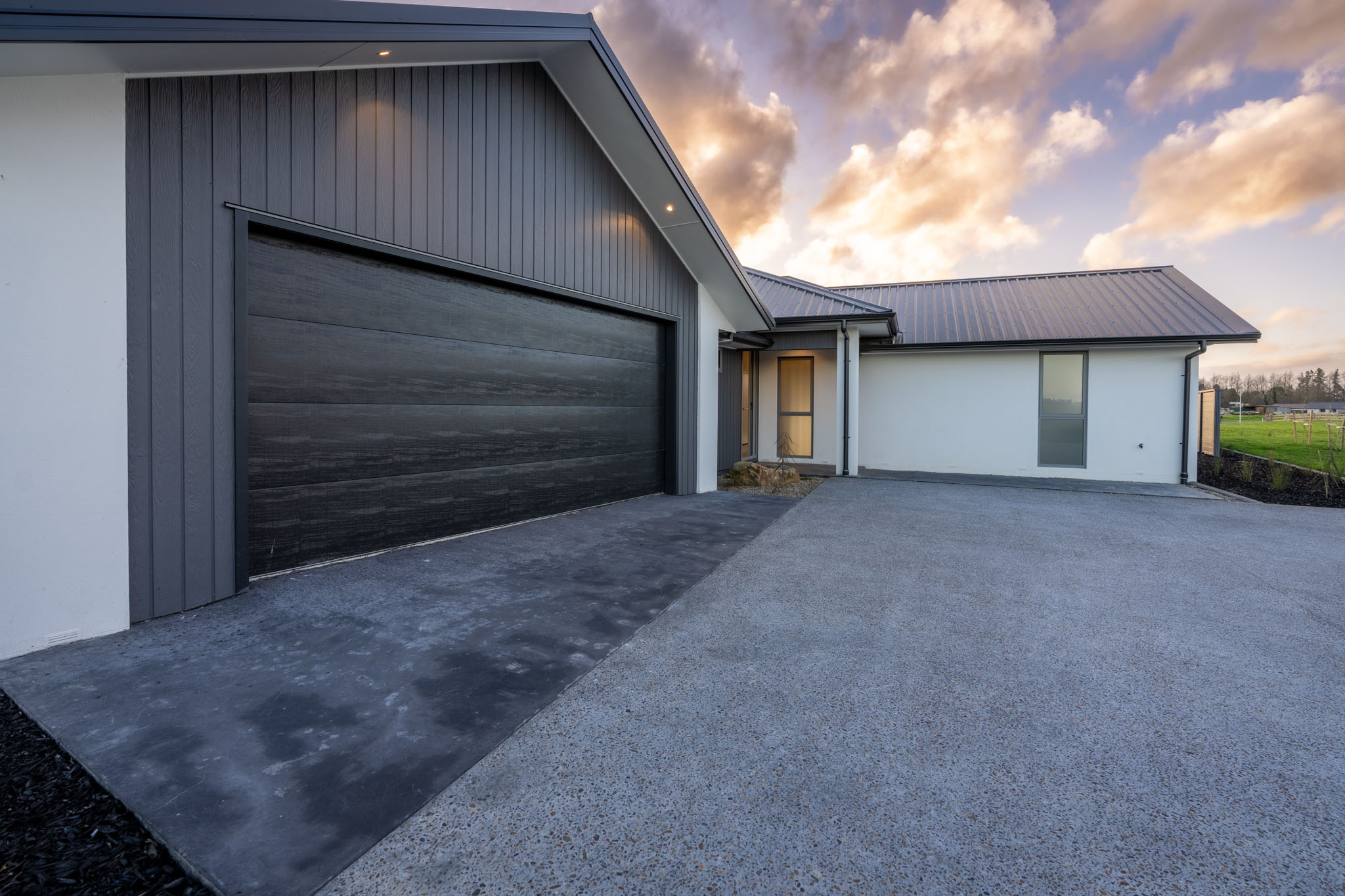
If you consider about garage door replacement, the important decisions is whether to install the same type of door or change to a different system.
In Auckland, many older homes were originally fitted with tilt doors or roller doors. Today, sectional garage doors are a popular replacement option because of their modern appearance, smooth operation and wide range of panel designs.
Where the garage structure allows, homeowners often choose to replace an old tilt or roller door with a new sectional door.
However, upgrading to a sectional door is not always possible or necessarily the best solution. In some situations, replacing the existing door with a new door of the same type is the more practical choice.
Let’s look at the most common replacement scenarios and the technical factors involved.
1. Sectional Door to Sectional Door Replacement
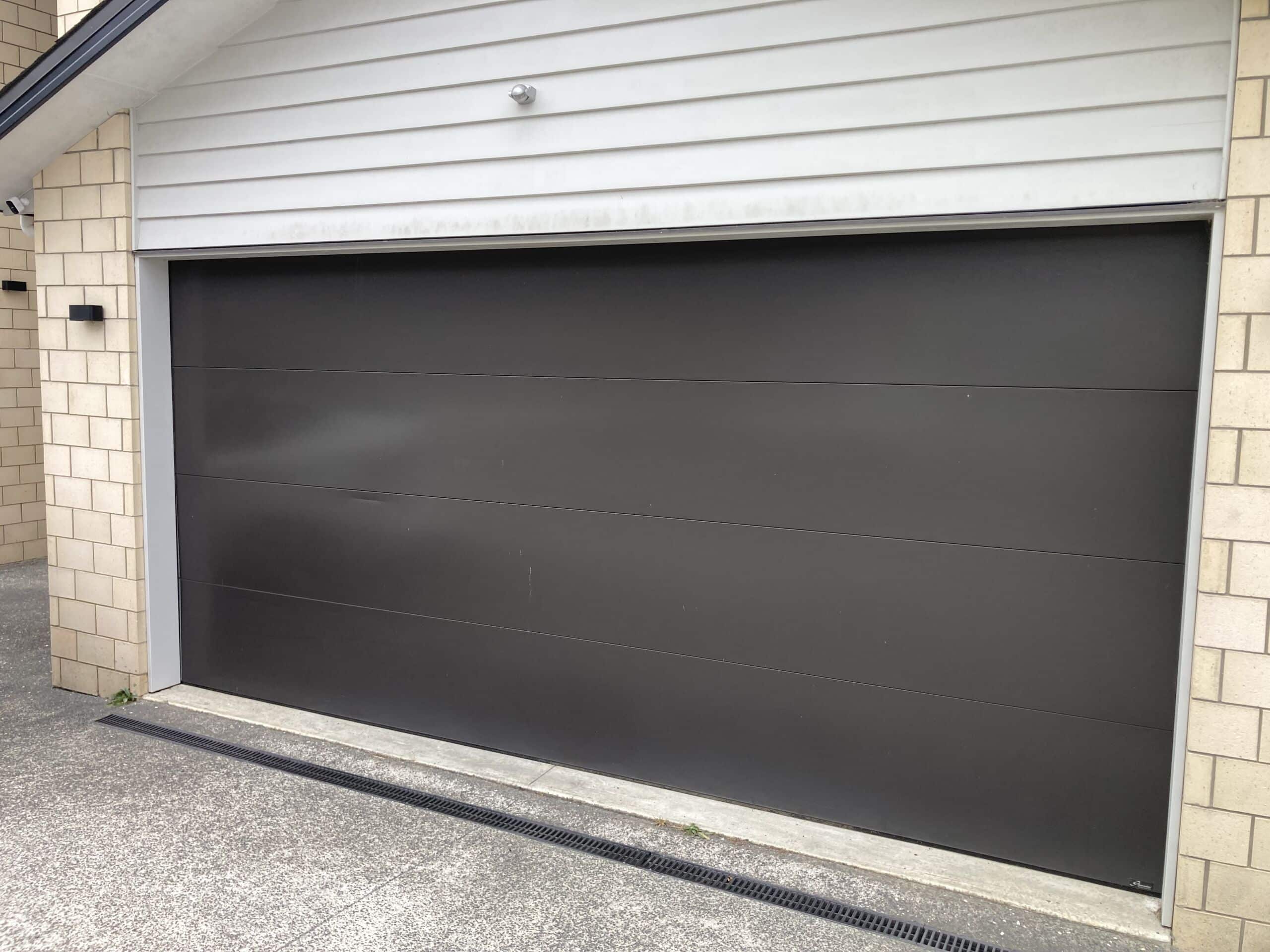
Replacing an existing sectional garage door with a new sectional door is generally one of the most straightforward replacement options.
A sectional garage door consists of multiple horizontal panels connected by hinges. As the door opens, rollers travel along vertical tracks and then into horizontal tracks suspended beneath the garage ceiling.
Why replace an existing sectional door?
There are several common reasons:
Ageing and deterioration
Over time, garage door panels may develop corrosion, surface damage, weakened joints or other signs of deterioration. In coastal areas of Auckland, exposure to moisture and salt-laden air can accelerate corrosion, particularly where protective coatings have been damaged.
Accidental damage
A vehicle accidentally reversing into a garage door is a common reason for replacement.
Depending on the severity of the impact, one or more panels may become bent, distorted or damaged beyond economical repair.
Although individual panels can sometimes be replaced, a complete door replacement may be more practical when matching panels are unavailable or the damage affects multiple sections.
Changing the colour or appearance
Some homeowners simply want to update the appearance of their property.
Replacing an older garage door with a new colour or contemporary panel design can significantly improve the overall appearance of the house.
Upgrading the panel design
Another common reason is upgrading from a traditional woodgrain-style sectional door to a more contemporary smooth-panel design.
Depending on the product range, smooth-panel doors may be manufactured from heavier-gauge steel or incorporate additional structural features.
However, panel thickness and strength vary between manufacturers and products, so the specifications should always be compared rather than assuming that every smooth-panel door is stronger.
Why is sectional-to-sectional replacement usually easier?
Because the garage already accommodates a sectional door system, the basic structural requirements are often in place.
These may include:
• Sufficient headroom above the garage opening
• Suitable side room for the vertical tracks
• Adequate ceiling clearance for horizontal tracks
• Suitable fixing points for the tracks and spring system
In many cases, the new door can be installed without major structural alterations.
However, the existing tracks, springs, cables and mounting hardware should not automatically be reused. New sectional doors are generally installed with compatible hardware specified for their dimensions, weight and design.
Example: A homeowner has a 20-year-old sectional garage door with damaged woodgrain panels. They want to replace it with a modern flat smooth-panel door in a darker colour.
If the opening dimensions and available clearances are suitable, the old system can be removed and a new sectional door installed in its place with relatively little modification to the garage structure.
2. Tilt Door to Tilt Door Replacement
Replacing an old tilt garage door with another tilt door is less common today, but it remains necessary in some older properties.
Unlike a sectional door, which is made up of several hinged panels, a tilt door usually consists of one large rigid panel that pivots and moves upwards as it opens.
Why would someone keep a tilt door?
The most common reason is insufficient headroom.
Many older Auckland homes were built with relatively low garage ceilings or limited space above the garage opening.
A conventional sectional garage door generally requires approximately 160mm of headroom as a useful planning reference, although the actual requirement depends on the manufacturer, track configuration, spring system and opener arrangement.
Some systems require more clearance, while specially designed low-headroom systems may require less.
If the garage cannot accommodate the required sectional door hardware, installing another tilt door may be the most practical solution.
Technical considerations
When considering a tilt-to-sectional conversion, the installer needs to assess several factors:
Headroom above the opening
Sectional doors require sufficient clearance for the top panel, tracks, rollers and associated lifting hardware.
Ceiling height and obstructions
Low beams, ceiling framing, pipes and other obstacles may interfere with the proposed track installation.
Door movement and clearance
Tilt doors move as a single panel, often projecting outward during opening. The replacement system must be suitable for the available internal and external clearance.
Structural support
The new door’s weight and lifting mechanism must be supported by appropriate fixing points and structural framing.
When is tilt-to-tilt replacement the better choice?
If the existing garage has extremely limited headroom and structural modifications would be expensive or impractical, replacing the tilt door with another tilt door can avoid unnecessary building work.
Example: An older Auckland home has a garage with a low ceiling and a concrete beam immediately above the opening.
The available headroom is insufficient for the proposed sectional door track system.
Rather than modifying the beam or garage structure, the homeowner chooses to replace the ageing tilt door with a new tilt door designed for the existing opening.
This provides a practical replacement while retaining the original door operating principle.
3. Roller Door to Roller Door Replacement
Replacing an existing roller garage door with another roller door is also common in certain situations.
Roller doors operate differently from sectional doors.
Instead of travelling along horizontal ceiling tracks, a roller door curtain rolls around a drum above the garage opening.
This difference can make roller doors particularly useful where ceiling space is limited or needs to remain unobstructed.
There are two main reasons why homeowners may prefer to keep a roller door.
Reason 1: Maximising Usable Ceiling Space
Some homeowners want to make the most of their garage ceiling space.
When a sectional door opens, its panels travel along horizontal tracks and occupy a substantial area beneath the ceiling.
This may interfere with overhead storage systems, suspended equipment or other uses of the garage.
A roller door, by comparison, rolls into a compact curtain above the opening, leaving most of the ceiling area unobstructed.
This can be particularly useful in garages used for storage, workshops or other activities.
Example: A homeowner uses the garage as a workshop and has overhead storage racks installed near the ceiling.
Replacing the roller door with a sectional door would require horizontal tracks across part of this area.
The homeowner therefore chooses a new roller door to preserve the available ceiling space.
Reason 2: Restricted Headroom Further Inside the Garage
Another common situation involves a garage where the ceiling height changes further inside the building.
For example, there may be sufficient space directly above the garage opening, but a concrete beam, lowered ceiling section or other structural obstruction reduces the available clearance further inside.
A sectional door requires a clear travel path for its horizontal tracks and door panels.
Even if there is enough headroom immediately above the opening, the door may not be able to travel fully into the garage.
A roller door can sometimes overcome this problem because its curtain rolls up near the entrance rather than extending along the ceiling.
Example: A garage has adequate clearance above the entrance, but a large structural beam runs across the ceiling approximately two metres inside.
The beam obstructs the travel path required for a sectional door.
Provided there is sufficient space for the roller curtain and drum above the opening, a replacement roller door may be the most suitable option.
Important: Roller Doors Also Need Headroom
Although roller doors do not require horizontal ceiling tracks, they still need sufficient space above the opening for the rolled-up curtain.
The required space depends on the door height, curtain profile, drum diameter and manufacturer specifications.
For this reason, a roller door is not automatically suitable for every low-headroom garage.
4. Why Is Replacing a Garage Door With the Same Type Often Easier?
One of the main advantages of replacing a garage door with the same operating type is that many of the original installation conditions are already suitable. We highly recommend the Windsor products because they shows stability and long-lasting.
The garage opening, available clearances and general door movement have usually been designed around that particular system.
This can reduce the need for major structural modifications.
For example:
• A sectional-to-sectional replacement may use a similar track layout and mounting arrangement.
• A tilt-to-tilt replacement may suit the existing low-headroom opening.
• A roller-to-roller replacement may retain the original ceiling clearance and storage arrangement.
However, a like-for-like replacement is not necessarily a direct swap.
Different manufacturers may use different mounting systems, fixing positions, track profiles and spring arrangements.
The condition of the supporting structure must also be checked, particularly in older garages where timber framing, fixing points or surrounding materials may have deteriorated.
5. Why Do Many Homeowners Prefer Sectional Garage Doors?
Where installation conditions are suitable, sectional garage doors offer several practical advantages.
Modern appearance
Sectional doors are available in a wide variety of colours, panel profiles and finishes, making them suitable for both modern and traditional homes.
Smooth operation
A properly installed and maintained sectional door operates along guided tracks, providing controlled movement during opening and closing.
Design flexibility
Sectional doors are available with different panel constructions, including options designed for improved rigidity, insulation or appearance.
Sealing options
With suitable bottom, side and top seals, a sectional door can help reduce draughts, dust and water ingress. Actual sealing performance depends on the door system, floor condition and installation.
Automation
Sectional doors are generally well suited to modern automatic garage door openers when the opener and door hardware are correctly matched.
These benefits make sectional doors an attractive replacement option for many Auckland homeowners.
However, the best door type ultimately depends on the garage structure, available space and how the homeowner intends to use the garage.
6. What Should Be Checked Before Replacing a Garage Door?
Before recommending a replacement door, a professional garage door installer should assess:
1. Opening dimensions: Width and height of the existing garage opening.
2. Headroom: Clearance between the top of the opening and the lowest relevant ceiling obstruction.
3. Side room: Space available beside the opening for tracks, brackets or lifting hardware.
4. Internal clearance: Distance into the garage available for door movement and track installation.
5. Structural fixing points: Suitability of the surrounding framing, ceiling supports and mounting surfaces.
6. Garage door opener: Whether the existing opener is compatible with the replacement door.
7. Intended use: Whether ceiling storage, vehicle clearance or other practical requirements affect the door selection.
These measurements are particularly important when converting from a tilt or roller door to a sectional door.
Conclusion: Which Garage Door Replacement Is Best?
There is no single garage door type that suits every property.
For many Auckland homes, upgrading an old tilt or roller door to a modern sectional garage door is an attractive option, provided the available space and structure are suitable.
However, replacing the existing door with the same type can be a better choice when headroom is limited, ceiling obstructions prevent sectional door installation or the homeowner wants to preserve overhead storage space.
A like-for-like replacement is often simpler, but it still requires correct measurements, compatible hardware and professional installation.
At Eden Garage Doors, we can assess your existing garage door and recommend a suitable replacement based on your garage structure, available clearance and individual requirements.
Whether you are considering a sectional-to-sectional replacement, a tilt-to-tilt replacement, a roller-to-roller replacement or upgrading to a sectional door, choosing the right system from the beginning can help avoid unnecessary modifications and installation costs.