DIY Garage Door Maintenance: Simple Things You Can Do Yourself
Your garage door is probably one of the most frequently used moving parts in your home.
The good news is that you don’t need to be a garage door technician to take care of some basic maintenance yourself.
A few simple checks and cleaning tasks can help your garage door operate more smoothly, reduce unnecessary wear and help identify problems before they become expensive repairs.
However, it’s important to know what you can safely do yourself — and what should be left to a professional.
Here are some simple DIY garage door maintenance tasks that Auckland homeowners can do.
- Keep the Garage Door Clean
This is one of the easiest and most useful things you can do.
Dust, dirt, cobwebs and other debris can build up around the door, tracks and moving components.
Over time, dirt can work its way into moving parts and increase friction.
What you can do
- Wipe down the door panels
- Remove cobwebs around the tracks
- Clean dirt from around the bottom seal
- Keep the area around the tracks clear
- Remove leaves and debris from around the garage entrance
If you live near the coast, regular cleaning is particularly useful because salt and moisture can contribute to corrosion.
- Check the Garage Door Tracks
Take a quick look at both vertical and horizontal tracks.
You are looking for obvious problems such as:
- Bent tracks
- Loose mounting brackets
- Heavy dirt buildup
- Rust
- Objects blocking the track
- Rollers that appear to be coming out of alignment
What NOT to do
Don’t try to bend the track back into position yourself.
Garage door tracks are part of a carefully aligned system. Trying to straighten them with a hammer or other tools can make the problem worse.
If a track is bent or seriously misaligned, have it checked by a professional.
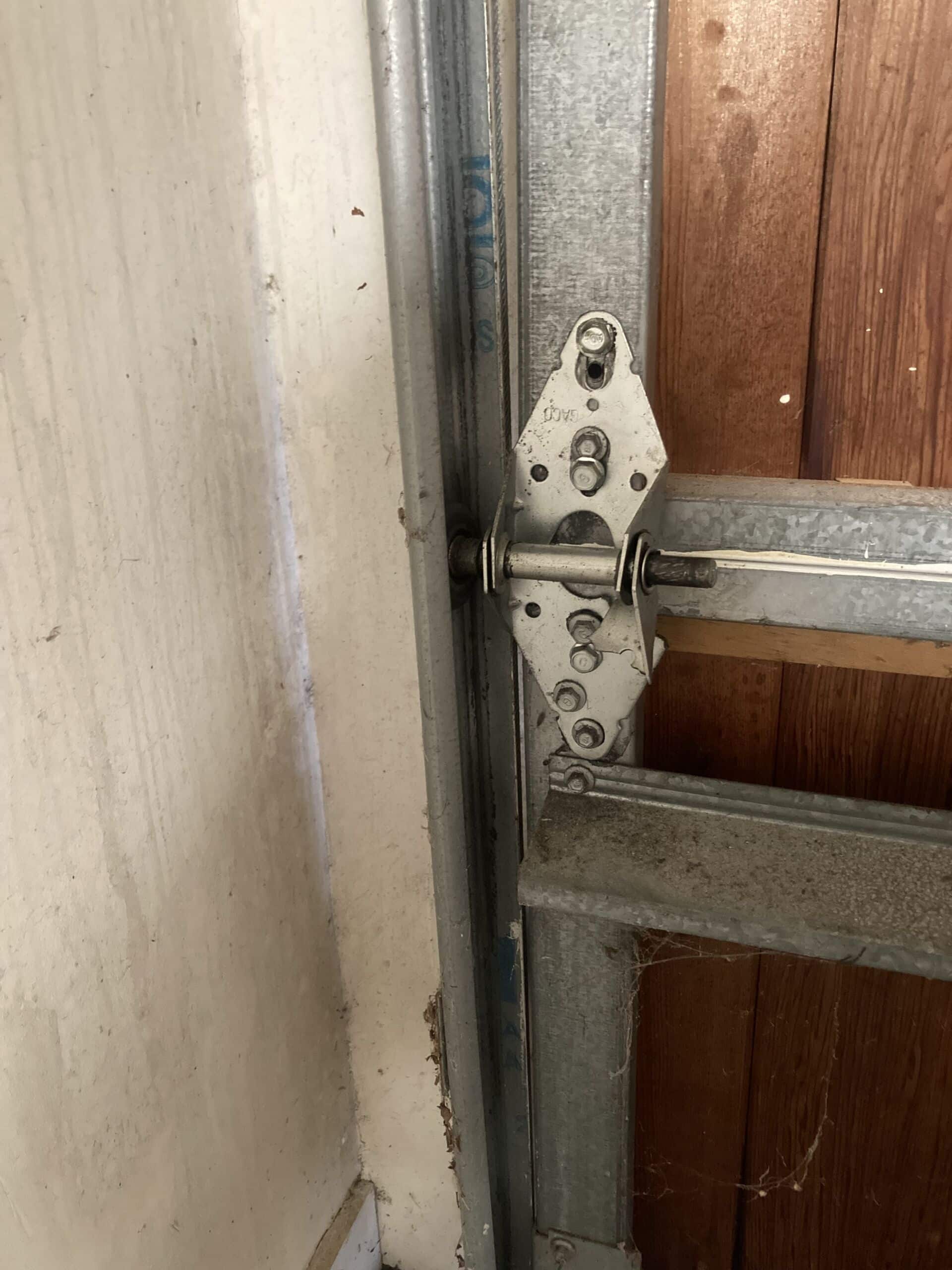
- Check the Rollers
Rollers allow the garage door to move along the tracks.
As they wear, you may notice:
- More noise
- Grinding or squeaking
- Rough movement
- Excessive vibration
You can visually inspect the rollers for obvious damage or wear.
If a roller is cracked, badly worn or coming out of the track, don’t continue operating the door repeatedly.
A professional can determine whether the roller or another part of the system is causing the problem.
- Listen to Your Garage Door
Your ears can be one of your best maintenance tools.
A garage door that has been operating normally for years should not suddenly become much louder.
Pay attention to changes such as:
Squeaking → grinding → rattling → vibration → unusual motor noise
A change in sound can be an early warning that something is wearing out.
Don’t simply turn up the television and ignore it!
Finding the cause early can often prevent a small problem from becoming a major repair.
- Check the Door Balance — Carefully
The garage door should be properly balanced by its spring system.
A door that suddenly feels much heavier than normal may have a spring or mechanical problem.
You can notice this simply from the way the door operates.
If the opener starts struggling to lift the door, don’t assume the motor is failing.
The door itself may have become too heavy for the opener.
Important safety warning
Do not attempt to adjust or remove garage door springs yourself.
Garage door springs can store a large amount of energy and can cause serious injury if they are incorrectly handled.
If you suspect a spring problem, contact a qualified garage door technician.
- Check the Bottom Seal
The rubber seal along the bottom of the garage door helps keep out:
- Rain
- Wind
- Dust
- Leaves
- Insects
Over time, the seal can become hard, cracked or damaged.
Look along the bottom of the door and check whether the seal is still flexible and making reasonable contact with the floor.
A damaged bottom seal is relatively simple to replace compared with many other garage door components.
- Clean the Safety Sensors
If your garage door opener has safety photo-eye sensors, keep them clean and unobstructed.
These sensors are usually positioned near the bottom of the door opening, one on each side.
Dust, cobwebs or accidental movement can affect their operation.
DIY check
Gently wipe the sensor lenses with a soft, dry cloth.
Make sure:
- Nothing is blocking the sensors
- The lenses are clean
- Both sensors appear correctly aligned
If the door repeatedly reverses or the sensors don’t appear to work correctly, don’t bypass the safety system.
Have the opener checked.
- Lubrication: Be Careful With Grease and Oil
This is one of the most common DIY maintenance mistakes.
Many people hear a squeaky garage door and immediately spray oil or grease onto everything that moves.
It may make the door quieter temporarily, but more lubricant is not necessarily better.
Why can ordinary grease or oil cause problems?
Grease and oil can attract and hold:
- Dust
- Dirt
- Sand
- Fine metal particles
- Other debris
Instead of creating a clean lubricating surface, the grease can eventually become dirty, sticky and abrasive.
Think of it like this:
Fresh grease + dust → sticky paste → more dirt → increased friction
This can actually make moving components dirtier over time.
It can also cause dirt to accumulate around rollers, hinges and other moving parts.
Don’t simply spray everything you see
Avoid coating:
- Tracks
- Door panels
- Safety sensors
- Belts
- Electrical components
with general-purpose grease or oil.
The correct lubricant depends on the particular component and garage door system.
For some components, a suitable garage-door-specific lubricant may be appropriate, but it should be used sparingly and according to the manufacturer’s recommendations.
The goal is lubrication — not covering the entire mechanism in grease.
- Don’t Lubricate the Tracks Like You Would a Machine
This is another common misconception.
The garage door rollers need to travel along the tracks, but the tracks themselves generally don’t need to be covered in grease.
A greasy track quickly becomes a dirt collector.
Instead, keep the tracks clean and properly aligned.
If the rollers or other components require lubrication, use the appropriate product on the appropriate component rather than spraying the entire track.
- Test the Auto-Reverse Safety Function
Your garage door opener should have a safety reversal system.
The exact testing procedure can vary between opener manufacturers, so check your opener’s manual before performing a test.
If the safety function doesn’t operate correctly, stop using the opener until it has been checked.
Never disable or bypass a garage door opener’s safety features.
What You Should NOT DIY
There are some jobs where professional help is strongly recommended.
These include:
Garage door springs
Springs are under significant tension and can cause serious injury.
Garage door cables
A damaged or loose cable can indicate a serious mechanical problem.
Major track adjustment
Incorrect alignment can affect the entire door system.
Door lifting problems
If the door suddenly becomes very heavy, the cause should be investigated rather than simply increasing the opener force.
Opener electrical repairs
Control boards, wiring and electrical components should be handled by a suitably qualified person.
A Simple DIY Maintenance Routine
You don’t need to spend hours maintaining your garage door.
Every few months, spend a few minutes checking:
👀 LOOK
Check:
- Door panels
- Tracks
- Rollers
- Hinges
- Springs
- Cables
- Bottom seal
Look for obvious rust, damage or unusual movement.
👂 LISTEN
Listen for:
- New squeaks
- Grinding
- Rattling
- Excessive vibration
- Changes in motor noise
🧹 CLEAN
Clean:
- Door surfaces
- Tracks
- Safety sensors
- Bottom seal area
- Cobwebs and debris
⚙️ CHECK
Make sure:
- The door moves smoothly
- Nothing is blocking the tracks
- Safety sensors are clean
- The opener operates normally
🚨 CALL A PROFESSIONAL
If you notice:
- A broken spring
- Frayed cable
- Bent track
- Door becoming very heavy
- Door coming off the track
- Severe grinding
- Opener struggling
- Door operating unevenly
don’t keep operating the door and hope the problem disappears.
The Golden Rule of DIY Garage Door Maintenance
Clean it. Listen to it. Watch how it moves. Don’t force it.
You can safely perform many simple maintenance checks yourself.
But garage doors contain high-tension springs, cables and heavy moving components. Some repairs that look simple can be dangerous.
The purpose of DIY maintenance isn’t to repair everything yourself.
It’s to keep the system clean, identify early warning signs and prevent small problems from becoming expensive ones.
Auckland Garage Door Maintenance
Auckland’s damp weather, rain and coastal air can make regular cleaning and inspection particularly important.
A few minutes of simple maintenance can help keep your garage door running smoothly and may extend the life of both the door and the automatic opener.
If your garage door is becoming noisy, heavy, slow or unreliable, don’t just keep spraying it with oil.
The noise may be telling you that something needs attention.
A professional inspection can identify the actual cause before a relatively small problem develops into a major repair.