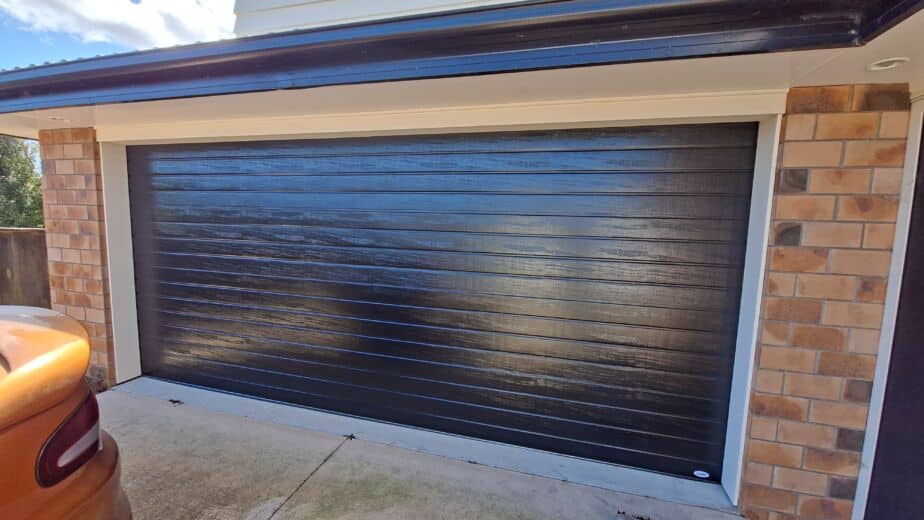
Sectional Garage Door Profiles Explained: Which Design Is Best for Your Home?
Flat Woodgrain, Ribline, Fineline & Pressed Panel – A Complete Guide
Choosing a new sectional garage door involves more than selecting the right colour. The panel profile plays an important role in determining how well your garage door complements the architectural style of your home.
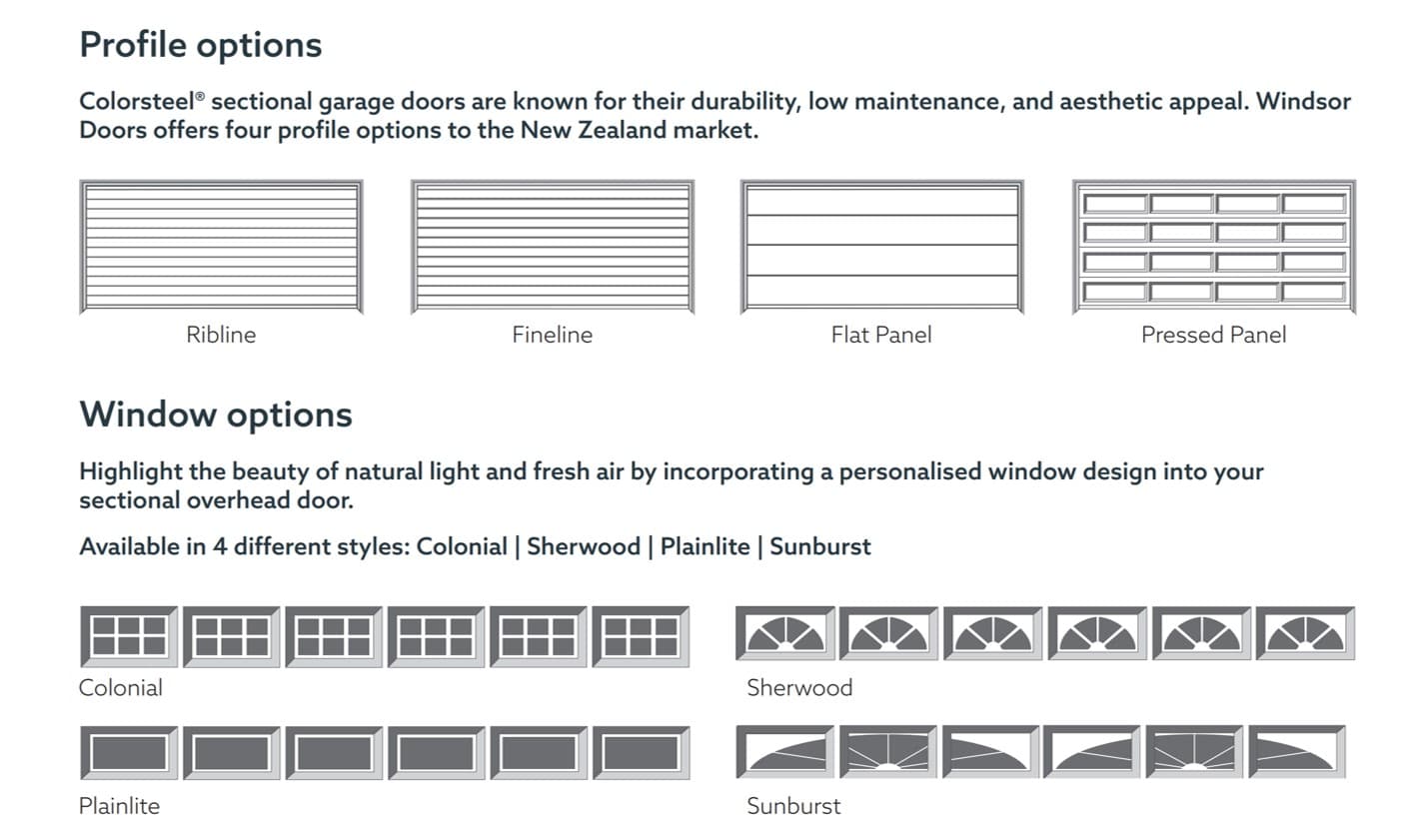
In New Zealand, four popular COLORSTEEL® sectional garage door profiles offer different appearances, from clean and modern flat panels to traditional pressed designs.
At Eden Garage Doors, we believe choosing the right profile should start with understanding your home’s exterior design.
For example, a modern plaster home may look best with a clean Flat Woodgrain finish, while a traditional weatherboard or brick home may benefit from the horizontal detailing of a Ribline door.
In this guide, we explain the four popular sectional garage door profiles, their design characteristics, which types of homes they suit best, and why woodgrain embossing is commonly used on 0.6mm COLORSTEEL® garage door panels.
- Flat Woodgrain – Perfect for Modern Architectural Homes
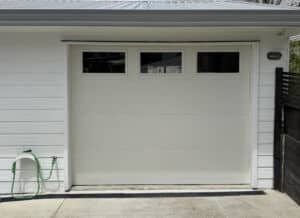
Flat Woodgrain is one of the most popular choices for modern and contemporary homes.
As its name suggests, this profile features a relatively flat and uncluttered surface with a subtle embossed woodgrain texture.
Unlike Ribline and Fineline, Flat Woodgrain does not have prominent horizontal ribs or pressed detailing across the panel surface.
Its minimalist appearance allows the garage door to blend naturally with the clean architectural lines of modern homes.
Design Characteristics
- Relatively flat panel surface.
- Subtle woodgrain embossed texture.
- Minimal visible horizontal detailing.
- Clean and contemporary appearance.
- Simple design that allows the garage door colour to stand out.
Best Suited to These Homes
Flat Woodgrain is particularly suitable for:
- Modern architectural homes.
- Contemporary plaster-clad houses.
- Homes with smooth exterior finishes.
- Minimalist designs with simple architectural lines.
- Modern homes featuring timber or natural stone accents.
Why Choose Flat Woodgrain?
Modern homes often feature large, uninterrupted wall surfaces and simple geometric designs.
A heavily ribbed or decorative garage door can sometimes look out of place against these clean architectural features.
Flat Woodgrain provides a more seamless appearance, helping the garage door become part of the overall exterior design rather than a separate decorative feature.
It is particularly attractive in colours such as Ironsand, FlaxPod, Grey Friars, Titania and Threadbow White.
An Important Consideration: Panel Vibration and Noise
Although Flat Woodgrain offers a very clean appearance, its relatively flat panel construction has one practical consideration.
Unlike Ribline, Fineline and Pressed Panel, Flat Woodgrain does not have the same pronounced pressed shapes and reinforcing folds across its face.
Because of this, the larger flat steel surfaces can be more susceptible to vibration or resonance when the garage door operates.
Depending on the door size, construction and installation, this may produce:
- A noticeable vibrating sound.
- A hollow or drumming noise.
- Panel resonance during opening and closing.
- Increased noise when the door is exposed to wind or vibration.
This does not mean that every Flat Woodgrain door will be noisy. The result depends on the panel construction, reinforcement, installation and operating conditions.
Our Recommendation: Consider Adding Insulation
For homeowners choosing a Flat Woodgrain sectional garage door, we recommend considering an insulation option at the time of installation.
Suitable garage door insulation can help:
- Reduce panel vibration.
- Dampen hollow or drumming sounds.
- Improve the overall acoustic feel of the door.
- Reduce heat transfer through the door panels, depending on the insulation system.
Insulation adds weight to the garage door, so the spring system must be correctly specified for the finished door weight.
For this reason, insulation should be selected as part of the complete garage door specification rather than added without checking the existing lifting system.
Our advice: If you love the clean appearance of Flat Woodgrain, adding suitable insulation is worth considering for a quieter and more substantial-feeling garage door.
- Ribline – Ideal for Weatherboard and Brick Homes
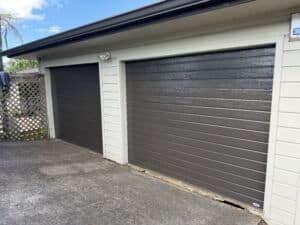
Ribline is a traditional sectional garage door design featuring prominent horizontal lines that replicate the appearance of timber weatherboards.
Its distinctive horizontal detailing makes it particularly suitable for New Zealand homes with traditional exterior cladding.
Unlike Flat Woodgrain, Ribline has more pronounced pressed sections across the face of each panel, creating a deeper and more structured appearance.
Design Characteristics
- Distinctive horizontal ribbed profile.
- Weatherboard-inspired appearance.
- More pronounced panel detailing.
- Traditional and versatile design.
- Available in woodgrain and, depending on the product range, smooth finishes.
Best Suited to These Homes
Ribline is particularly suitable for:
- Traditional weatherboard houses.
- Brick homes with horizontal architectural features.
- Homes with Linea-style exterior cladding.
- Classic suburban houses.
- Properties with timber-inspired exterior finishes.
Why Choose Ribline?
Many New Zealand homes feature horizontal weatherboard cladding.
Choosing a Ribline garage door creates a similar horizontal pattern, helping the garage door blend naturally with the rest of the house.
It is also a popular option for brick homes because its horizontal detailing provides visual interest without introducing an overly modern or minimalist appearance.
The pressed horizontal sections also give the panel a more structured appearance compared with a completely flat surface.
Our recommendation: If your home has traditional weatherboard cladding or a brick exterior, Ribline is an excellent starting point when choosing a garage door profile.
- Fineline – Ideal for Modern and Plaster-Clad Homes
Fineline offers a more refined horizontal design compared with the traditional Ribline profile.
It features narrower and more closely spaced horizontal lines, creating a sleek architectural appearance.
The design provides enough detail to give the garage door some visual texture while maintaining a relatively clean and contemporary look.
Design Characteristics
- Fine horizontal pressed lines.
- More subtle detailing than Ribline.
- Sleek and modern appearance.
- Balanced combination of flat surfaces and horizontal definition.
- Suitable for contemporary architectural designs.
Best Suited to These Homes
Fineline works particularly well with:
- Modern plaster-clad homes.
- Contemporary architectural houses.
- Modern brick homes.
- Homes with simple horizontal exterior features.
- Properties with a combination of plaster, timber and other cladding materials.
Why Choose Fineline?
Plaster-clad homes often feature relatively smooth exterior surfaces.
A traditional Ribline profile may introduce stronger horizontal detailing than some homeowners prefer.
Fineline offers a more subtle alternative, providing a contemporary appearance without making the garage door look completely flat.
Its fine horizontal lines also create a sophisticated appearance when combined with modern exterior colours.
Popular colour combinations include:
- Grey Friars with white plaster walls.
- Ironsand with light grey exterior finishes.
- FlaxPod with white or cream cladding.
- Gull Grey with darker architectural details.
Our recommendation: Fineline is an excellent choice for homeowners who want a modern appearance but prefer a little more panel definition than Flat Woodgrain.
- Pressed Panel – Ideal for Traditional and Older-Style Homes
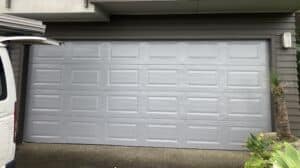
Pressed Panel features a traditional rectangular panel design created by pressing patterns into the steel.
Unlike the horizontal lines of Ribline and Fineline, Pressed Panel creates individual rectangular sections across the garage door.
This gives the door a classic appearance that is particularly well suited to older-style New Zealand homes.
Design Characteristics
- Traditional rectangular pressed patterns.
- Raised or recessed panel detailing.
- More decorative appearance.
- Classic architectural styling.
- Suitable for traditional window and exterior designs.
Best Suited to These Homes
Pressed Panel is particularly suitable for:
- Older-style residential homes.
- Traditional brick houses.
- Classic suburban properties.
- Colonial-inspired homes.
- Houses with traditional window and door designs.
Why Choose Pressed Panel?
Older homes often feature more traditional architectural details, including decorative windows, brickwork, timber trims and defined exterior sections.
A completely flat modern garage door may sometimes look too simple against these features.
Pressed Panel provides a more traditional appearance that complements the character of older homes.
The rectangular detailing also creates a natural visual connection with traditional window designs and other architectural features.
Our recommendation: If you own an older-style brick or traditional home and want your new garage door to maintain the original character of the property, Pressed Panel is an excellent option.
- Comparing the Four Garage Door Profiles
Each profile has its own appearance and is suited to different architectural styles.
| Profile | Panel appearance | Recommended home style |
| Flat Woodgrain | Flat with subtle woodgrain texture | Modern architectural homes |
| Ribline | Prominent horizontal ribs | Weatherboard and brick homes |
| Fineline | Fine horizontal lines | Modern and plaster-clad homes |
| Pressed Panel | Rectangular pressed patterns | Traditional and older-style homes |
Which Profile Should You Choose?
Here is our simple recommendation:
Modern architectural home: Flat Woodgrain
Weatherboard or traditional brick home: Ribline
Modern plaster-clad home: Fineline
Older-style traditional home: Pressed Panel
These are general recommendations. The final choice should also consider the roof design, exterior colours, windows, fencing and the overall proportions of the house.
- Why Do 0.6mm COLORSTEEL® Garage Door Panels Have a Woodgrain Texture?
One of the most common questions about COLORSTEEL® sectional garage doors is why the steel panels have a woodgrain embossed surface.
After all, if the garage door is made from steel, why not simply use a completely smooth finish?
The answer is related to the manufacturing process, surface appearance and practical characteristics of thinner steel panels.
- Helping to Hide Minor Surface Imperfections
Steel panels used in residential sectional garage doors are relatively thin compared with many other structural steel products.
During the manufacturing and forming process, minor surface variations can sometimes occur.
On a completely smooth steel surface, these variations may become more noticeable, particularly when sunlight reflects across the garage door.
Examples include:
- Minor surface waviness.
- Small manufacturing variations.
- Slight panel irregularities.
- Minor distortions caused by handling or installation.
The woodgrain embossed texture creates a patterned surface that helps break up reflected light.
This makes minor surface variations less noticeable compared with a completely smooth finish.
- Creating a More Natural Appearance
A completely smooth steel surface can sometimes look industrial or overly flat, particularly across a large double garage door.
Woodgrain embossing introduces a subtle texture that creates a softer and more natural appearance.
Although it is not real timber, the embossed surface gives the steel a more refined finish.
This makes it an attractive option for homeowners who want a modern garage door without the completely flat appearance of smooth steel.
- A Practical Manufacturing Solution
Embossing is also a practical way of producing an attractive surface finish on relatively thin steel panels.
Rather than relying entirely on a perfectly smooth surface, the textured finish provides a more forgiving visual appearance.
This is particularly useful for residential garage doors where large panel surfaces are exposed to changing lighting conditions throughout the day.
- Does Woodgrain Embossing Make the Steel Stronger?
The primary purpose of woodgrain embossing is to provide a surface texture and improve the visual appearance of the steel.
Although forming a profile can influence sheet stiffness, woodgrain texture should not be regarded as a substitute for structural reinforcement.
The overall strength and rigidity of a sectional garage door depend on the complete panel design, steel specification, formed edges, reinforcements and manufacturing construction.
- Why Does Flat Woodgrain Need More Attention Than Ribline or Fineline?
This is an important difference between the four profiles.
The design of a sectional garage door panel can influence how it behaves when the door is operating.
Ribline, Fineline and Pressed Panel have additional pressed shapes across their surfaces.
These formed sections create changes in the panel geometry and can contribute to its stiffness.
Flat Woodgrain, on the other hand, has a much larger uninterrupted flat surface.
Because of this, it may be more susceptible to vibration and resonance during operation.
Understanding the Difference
Flat Woodgrain
- Large relatively flat panel surfaces.
- Less pronounced pressed reinforcement across the panel face.
- Greater potential for panel vibration or drumming noise.
- Insulation is worth considering to improve acoustic damping.
Ribline
- More pronounced horizontal pressed sections.
- Additional formed geometry across the panel.
- A more structured appearance.
Fineline
- Multiple narrow horizontal pressed sections.
- More surface definition than Flat Woodgrain.
- A refined balance between flat and formed surfaces.
Pressed Panel
- Rectangular pressed sections across the panel.
- More pronounced changes in panel geometry.
- Traditional decorative appearance.
The actual stiffness and noise performance depend on the complete panel construction, not simply the visible profile.
Why We Recommend Insulation for Flat Woodgrain
Insulation can help reduce the transmission of vibration through the panel and dampen the hollow sound sometimes associated with large flat steel surfaces.
Depending on the insulation material and installation method, it can also provide additional thermal benefits.
However, insulation does not automatically eliminate all vibration or noise. Correct panel construction, door adjustment, roller condition, spring balance and opener operation are also important.
For homeowners choosing Flat Woodgrain, we recommend discussing insulation options with us before installation.
- Does Garage Door Insulation Make a Difference?
Garage door insulation is worth considering, particularly for larger sectional garage doors.
There are several potential benefits.
Reduced panel noise
Insulation can help dampen vibrations and reduce the hollow sound produced by some steel panels.
Improved thermal performance
Insulation can reduce heat transfer through the garage door, helping moderate temperature changes inside the garage.
More substantial panel feel
Depending on the insulation system, the door panels may feel less hollow and have a more solid acoustic character.
Additional comfort
If your garage is connected to the house or used as a workshop, insulation may improve the comfort of the space.
However, not all insulation systems provide the same performance.
The type of insulation, thickness, density, installation method and overall panel construction all matter.
It is also important to remember that adding insulation increases the total door weight.
The torsion spring system must therefore be checked and correctly balanced for the finished door.
- Choosing the Right Profile and COLORSTEEL® Colour Together
Once you have selected a panel profile, the next step is choosing a colour that complements your home.
The profile and colour should work together to create a balanced exterior appearance.
Here are some combinations worth considering:
| Profile | Suggested colours | Overall appearance |
| Flat Woodgrain | Ironsand, FlaxPod, Grey Friars | Modern and minimalist |
| Ribline | Titania, Threadbow White, Karaka | Traditional and natural |
| Fineline | Gull Grey, Windsor Grey, Ironsand | Contemporary and refined |
| Pressed Panel | Titania, Sandbar, Grey Friars | Classic and timeless |
For more information about choosing the right garage door colour, read our COLORSTEEL® Garage Door Colour Guide.
- Frequently Asked Questions
Q1. Which sectional garage door profile is best for a modern house?
Flat Woodgrain and Fineline are both excellent options.
Flat Woodgrain offers a clean minimalist appearance, while Fineline provides subtle horizontal detailing.
Q2. Which garage door profile is best for weatherboard homes?
Ribline is a popular choice because its horizontal lines complement traditional weatherboard cladding.
Q3. Is Flat Woodgrain completely smooth?
No. Flat Woodgrain has a relatively flat panel design with a subtle embossed woodgrain surface texture.
It is not the same as a completely smooth steel panel.
Q4. Why can Flat Woodgrain garage doors make a vibrating noise?
The large flat steel surfaces have fewer pronounced pressed sections across the panel face.
Depending on the door construction and operating conditions, this can allow the panels to vibrate or resonate.
Adding suitable insulation can help dampen this noise.
Q5. Does insulation make a garage door quieter?
It can help reduce panel vibration and hollow or drumming sounds.
However, other factors such as rollers, hinges, springs, tracks and the garage door opener also affect overall operating noise.
Q6. Is 0.6mm COLORSTEEL® thick enough for a sectional garage door?
0.6mm COLORSTEEL® is used in a number of residential sectional garage door ranges.
The suitability of a particular door depends on its steel specification, panel construction, reinforcement, dimensions and intended application.
It is important to compare the manufacturer’s actual material specifications rather than judging quality by thickness alone.
Q7. Can I add insulation to any sectional garage door?
Not necessarily. Insulation availability depends on the door model and manufacturer’s specifications.
The additional weight must also be considered when selecting and balancing the spring system.
- Need Help Choosing the Right Sectional Garage Door?
Choosing the right garage door profile can make a significant difference to your home’s overall appearance.
At Eden Garage Doors, we can help you select a sectional garage door that complements your home’s architectural style, exterior cladding and preferred COLORSTEEL® colour.
Whether you are considering Flat Woodgrain for a modern home, Ribline for a weatherboard property, Fineline for a contemporary plaster home or Pressed Panel for a traditional house, we can help you find the right solution.
We can also discuss insulation options, window designs and garage door automation to complete your new garage door installation.
Contact Eden Garage Doors today for professional advice and a free measure and quote across Auckland.
Website: https://edengaragedoors.co.nz/