Sovereign Garage Door Opener Problems: Troubleshooting, Repairs and When to Replace the Motor
A garage door opener is an important part of your home’s everyday convenience and security. When it stops working properly, makes unusual noises, or struggles to open and close the door, it can quickly become frustrating.
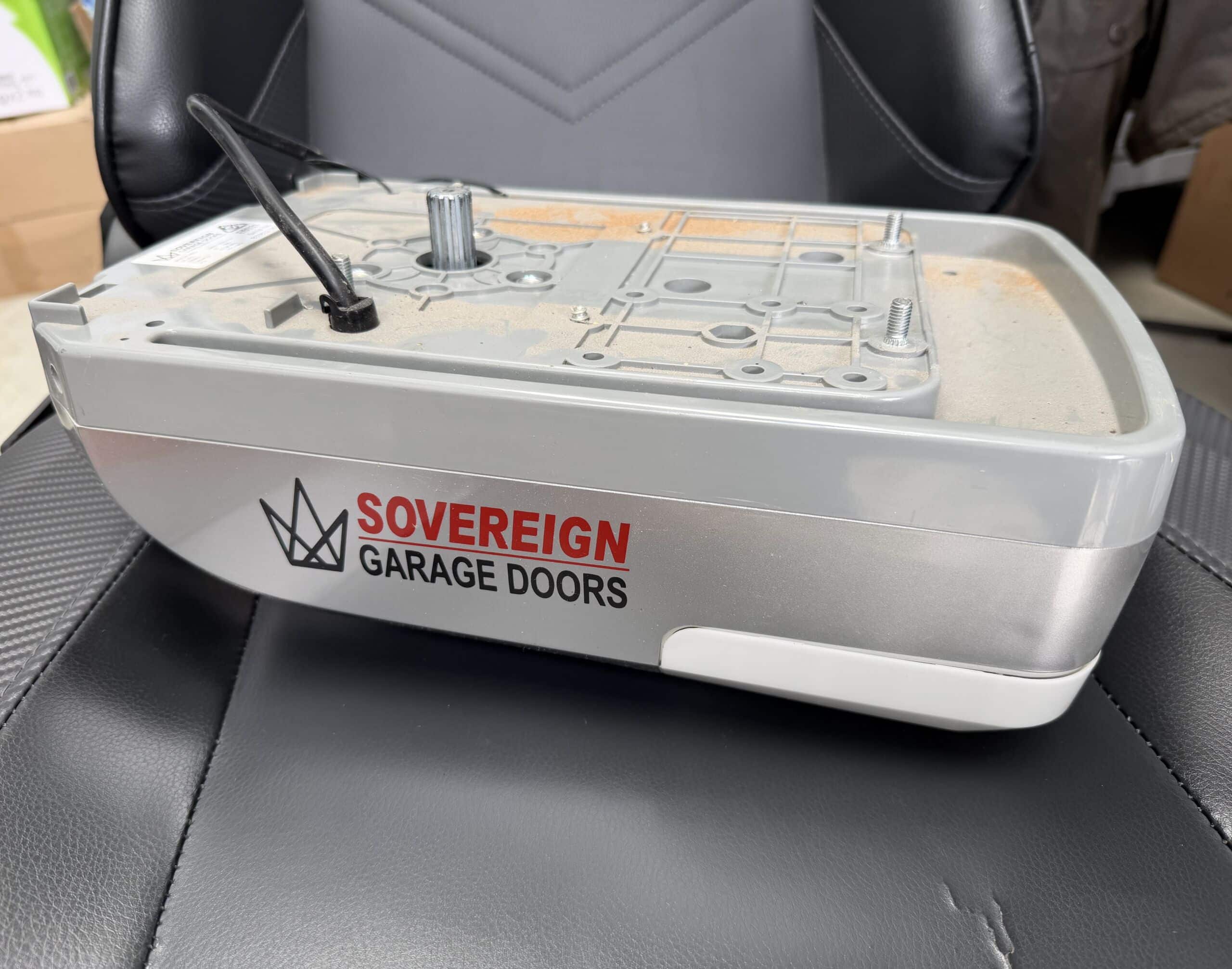
In Auckland, some homes have Sovereign garage door openers installed as part of their existing garage door systems. Like any automatic garage door opener, these units can experience electrical, mechanical and operational problems over time.
Understanding the common symptoms, possible causes and available repair options can help homeowners make an informed decision about whether to repair the existing opener or replace it with a new unit.
At Eden Garage Doors, we do not currently supply or install Sovereign-branded openers. However, we understand that homeowners may have an existing Sovereign motor installed and need general guidance when problems occur.
This article provides an objective overview of common garage door opener faults and explains when motor replacement may be a more practical long-term option than repeated repairs.
- Common Problems with Sovereign Garage Door Openers
A garage door opener consists of several electrical and mechanical components. A fault in any of these parts can affect the operation of the entire system.
The symptoms below are not unique to Sovereign products. They are common issues that can occur with many residential garage door opener brands.
1.1 The Motor Does Not Respond to the Remote Control
Possible symptoms:
- The garage door does not respond when the remote button is pressed.
- The motor unit has no lights or signs of operation.
- The wall control works, but the remote does not.
- None of the remotes operate the door.
Possible causes:
- Flat remote-control batteries.
- No power supply to the motor.
- A faulty power outlet or electrical connection.
- Remote-control programming issues.
- A faulty receiver or electronic control board.
What can be checked:
Start with the simple checks:
- Replace the remote-control battery.
- Check whether the motor has power.
- Check the power outlet using another suitable appliance.
- Try the wall control, if one is installed.
- Check whether the remote needs to be reprogrammed.
If the wall control works but none of the remotes do, the receiver or control board may require further inspection.
A complete motor replacement is not necessarily required for this type of fault.
1.2 The Motor Runs, but the Garage Door Does Not Move
Possible symptoms:
- The motor makes a running sound, but the door remains stationary.
- The motor runs without moving the trolley.
- A grinding or clicking noise comes from the motor unit.
- The belt or drive mechanism appears to move incorrectly.
Possible causes:
- A worn or damaged internal drive gear.
- A damaged trolley or carriage assembly.
- A disconnected or damaged belt.
- A faulty drive coupling.
- A problem with the motor’s internal transmission.
The drive gear and transmission transfer the motor’s power to the rail and trolley. If one of these components fails, the motor may still make a sound without successfully moving the door.
In some cases, the failed component can be replaced individually.
However, if the required parts are unavailable or the repair cost is high relative to the price of a replacement opener, replacing the complete motor unit may be more economical.
1.3 The Garage Door Starts Moving but Stops Halfway
Possible symptoms:
- The door starts opening but stops before reaching the fully open position.
- The door stops unexpectedly during closing.
- The opener reverses direction without an obvious obstruction.
- The motor appears to struggle during operation.
Possible causes:
- Incorrect travel-limit settings.
- An obstruction in the door tracks.
- Worn rollers or hinges.
- Poorly balanced garage door springs.
- Excessive friction in the door mechanism.
- A problem with the opener’s force detection or control system.
It is important to distinguish between a door problem and an opener problem.
A garage door that is difficult to move manually may place excessive strain on the motor. Increasing the opener’s force setting is not a proper solution to a heavy or poorly balanced door.
The door’s springs, cables, rollers and tracks should be checked by a qualified garage door technician before the motor is blamed.
1.4 The Motor Makes a Humming Noise but Does Not Operate
A humming sound without normal movement can indicate an electrical or mechanical fault.
Possible causes include:
- A faulty motor or motor control circuit.
- A damaged starting component, where fitted.
- A seized or obstructed drive mechanism.
- A broken or overloaded garage door spring.
- Excessive resistance from the garage door itself.
A humming motor does not automatically mean the motor has failed.
If the door is too heavy because of a broken spring or another mechanical problem, the opener may be unable to lift it.
This is why checking the garage door’s mechanical condition is an essential part of diagnosing the fault.
1.5 The Garage Door Reverses or Will Not Close Fully
Possible symptoms:
- The door begins closing and then opens again.
- The door stops just before reaching the floor.
- The motor light flashes or the opener indicates a fault.
- The door closes intermittently.
Possible causes:
- Incorrect travel-limit settings.
- Misaligned or obstructed safety sensors, if fitted.
- An obstruction along the door’s travel path.
- Incorrect force settings.
- A mechanical issue affecting the door’s movement.
Check that the door opening and floor area are clear of objects.
If safety sensors are installed, check for visible obstructions and make sure the sensor lenses are clean and correctly aligned.
Do not bypass safety devices or increase the closing force simply to make the door close.
- Why Do Garage Door Opener Motors Develop Problems?
Garage door openers operate repeatedly throughout the year. Every opening and closing cycle places stress on the motor, gearbox, drive mechanism and electronic components.
Several factors can contribute to premature failure or reduced reliability.
Normal Wear and Tear
Internal gears, bearings and drive components can gradually wear through repeated operation.
The amount of wear depends on the quality of the components, the number of operating cycles, the weight of the door and the condition of the overall garage door system.
Electrical and Electronic Component Failure
Modern openers rely on electronic control boards to manage motor operation, remote signals, safety functions and travel limits.
Electronic components can be affected by:
- Age and general deterioration.
- Electrical surges.
- Moisture or environmental exposure.
- Component failure.
- Heat generated during operation.
A faulty control board can sometimes be replaced without changing the entire opener.
However, the availability and cost of a compatible replacement board should be considered.
Excessive Load on the Motor
One of the most common reasons an opener experiences unnecessary strain is a poorly balanced garage door.
The opener is designed to move a properly balanced door, not to compensate for broken springs or excessive mechanical resistance.
If the springs are worn or incorrectly adjusted, the motor may have to work harder than intended.
This can shorten the service life of the opener.
Component Availability and Product Support
Another important consideration is the availability of replacement parts.
Some opener models have readily available replacement components, while parts for other models may be more difficult to obtain.
This can become particularly important as a product gets older or its model range changes.
Even when a motor can technically be repaired, the repair may not be practical if the required circuit board, gear assembly or other components are difficult to source.
- Repair or Replace? Which Option Makes More Sense?
Not every faulty garage door opener needs to be replaced.
The best decision depends on the type of fault, the age and condition of the unit, the cost of parts and labour, and the expected reliability after repair.
When Repairing the Existing Opener Is Worth Considering
Repair may be the sensible option when:
- The problem is caused by a flat remote battery or programming issue.
- A power supply or wiring fault can be corrected.
- A safety sensor needs cleaning or realignment.
- A travel-limit setting requires adjustment.
- A specific replacement part is readily available.
- The motor is otherwise in good condition.
For relatively minor faults, repairing the existing system can be a cost-effective solution.
When Replacing the Complete Motor Is a Better Option
A new opener may be the more practical choice when:
- Replacement Parts Are Difficult to Source
If a compatible circuit board, gearbox or internal component is no longer readily available, repairing the existing motor can become complicated.
Waiting for parts or trying to source components from different suppliers may also increase the total repair cost.
- The Repair Cost Is Too Close to the Cost of a New Opener
A repair quotation should include parts, labour, diagnosis and any follow-up work.
If the total cost approaches the price of a new opener with a fresh warranty, replacement may offer better value.
- Multiple Components Are Showing Signs of Wear
Replacing one failed component does not necessarily resolve other ageing components within the motor.
For example, a new circuit board will not repair a worn gearbox.
If several parts are deteriorating, repeated repairs may become expensive over time.
- The Motor Has a History of Repeated Problems
If the opener has already required several repairs and continues to operate inconsistently, it may be more economical to install a new system rather than continue spending money on an ageing unit.
- Long-Term Reliability Is a Priority
A new opener provides the opportunity to install a complete operating system with current safety features, available replacement parts and a new product warranty.
For homeowners who rely on their garage door every day, reducing the likelihood of repeated breakdowns can be an important consideration.
- Why a New Garage Door Opener Can Be a Better Long-Term Investment
The cheapest immediate repair is not always the cheapest long-term solution.
Consider the following example:
| Option | Initial cost | Longer-term consideration |
| Minor repair | Lower | Suitable if the fault is isolated |
| Major motor repair | Medium to high | Other ageing components may still fail |
| Complete motor replacement | Higher initial cost | New unit, new warranty and replacement parts availability |
The most appropriate option should be based on the actual condition of the opener rather than its brand name alone.
A new motor can offer several practical advantages:
- A fresh manufacturer’s warranty.
- New electronic and mechanical components.
- Better access to current replacement parts.
- Updated safety and operating features, depending on the model.
- Reduced uncertainty associated with repeated repairs.
- A more predictable maintenance and replacement outlook.
It is also important to ensure that the new motor is correctly matched to the garage door’s size, weight, balance and operating requirements.
A higher-rated motor is not automatically the better choice. Correct installation and a properly balanced door are just as important.
- What Should Be Checked Before Replacing the Motor?
Before recommending a replacement, a professional garage door technician should inspect the complete operating system.
This includes:
Garage Door Balance
The door should move smoothly without excessive resistance. A poorly balanced door can place unnecessary strain on any opener.
Springs and Cables
The springs provide the lifting assistance required for the door to operate safely. Damaged or worn springs and cables must be addressed before fitting a new motor.
Tracks and Rollers
Bent tracks, worn rollers and loose fittings can cause excessive friction and unusual operating noise.
Door Travel and Alignment
The door should move evenly and without binding throughout its opening and closing cycle.
Opener Compatibility
The replacement motor must be suitable for the door type, size, weight and required lifting force.
A new opener installed on a poorly maintained or unbalanced door may experience the same problems as the previous unit.
- Is It Safe to Repair a Garage Door Opener Yourself?
Some basic checks can be carried out by homeowners, such as replacing remote batteries, checking the power supply and clearing obstructions from the door’s path.
However, internal motor repairs and garage door mechanical adjustments should be handled by an experienced technician.
Garage door springs and cables operate under significant tension. Incorrect handling can cause serious injury.
Do not attempt to:
- Wind or unwind torsion springs.
- Adjust spring tension.
- Repair damaged lifting cables.
- Bypass safety sensors.
- Increase motor force settings to overcome a mechanical fault.
- Work on exposed electrical components without appropriate qualifications.
If the garage door is unusually heavy, crooked, stuck or making grinding noises, stop operating it and arrange a professional inspection.
- Does Eden Garage Doors Repair or Replace Sovereign Openers?
Eden Garage Doors does not currently supply or install Sovereign-branded garage door openers.
However, we recognise that some Auckland homes have existing Sovereign opener systems, and homeowners may need advice when these units develop faults.
There is no reason to assume that every problem requires a complete replacement. Some issues may be relatively simple, while others may involve internal components that are difficult or uneconomical to repair.
Sovereign products are also supported by businesses that specialise in their supply and servicing. Owners who wish to retain their existing system may prefer to contact their original supplier or a Sovereign service provider for model-specific repairs and replacement parts.
For homeowners considering a different opener, Eden Garage Doors can discuss suitable alternative options and the requirements for replacing an existing motor.
Our recommendation is always based on the condition of the complete garage door system, the availability of parts and the overall cost of the available solutions.
- Frequently Asked Questions
Is a Sovereign garage door opener worth repairing?
It depends on the nature of the fault, the availability of replacement parts and the cost of repair. Minor electrical or adjustment problems may be straightforward to resolve. More extensive internal failures may make complete replacement a more practical option.
Why does my Sovereign garage door motor make a noise but not open the door?
Possible causes include a damaged internal gear, a disengaged trolley, a belt or drive mechanism problem, or excessive resistance from the garage door. The door’s springs and mechanical balance should also be checked.
Can I replace only the circuit board instead of the whole motor?
Yes, if the circuit board is available and compatible with the existing model. However, if the motor and other internal components are also worn, replacing only the board may not provide a reliable long-term solution.
How do I know whether my garage door motor is too old to repair?
There is no single age at which every opener should be replaced. The condition of the unit, repair history, parts availability and total repair cost are more important than age alone.
Will a new garage door opener fix a heavy or noisy garage door?
Not necessarily. A heavy or noisy door may have problems with its springs, rollers, tracks or hinges. These issues should be corrected before installing a replacement opener.
Should I replace my garage door motor before it completely fails?
Not always. However, if the opener has become unreliable, parts are difficult to source or repair costs are increasing, planning a replacement before a complete breakdown can help avoid unexpected inconvenience.
Need Advice About Your Garage Door Opener?
Whether your garage door has a Sovereign opener or another brand, the important thing is to identify the actual cause of the problem before spending money on repairs or replacement.
At Eden Garage Doors, we believe homeowners should have clear information about their options, including the advantages and limitations of repairing an existing motor versus installing a new one.
If your garage door opener is noisy, unreliable or no longer operating correctly, contact our team to discuss the available options.
Eden Garage Doors – Practical Garage Door Solutions Across Auckland.