Garage Door Bottom Rubber Seal Replacement: When and Why Is It Needed?
The bottom rubber seal is a small but important component of a garage door. It helps protect your garage from rainwater, dust, leaves, insects and other unwanted debris. Although it may seem like a minor part, a worn or damaged seal can affect how well your garage door closes and protects the space inside.
How Long Does a Garage Door Bottom Seal Last?
A garage door bottom rubber seal typically lasts around five years, although its actual lifespan depends on the quality of the material, exposure to sunlight, temperature changes, moisture and general wear and tear.
Over time, the rubber gradually loses its flexibility. It can become hard, brittle and less able to compress against the ground. As it deteriorates further, it may crack, split or break into pieces.
In New Zealand, changing weather conditions and exposure to sunlight can contribute to the ageing of rubber seals. Regular inspection helps identify deterioration before it becomes a bigger problem.
What Are the Main Components?
A typical bottom seal assembly consists of two main components:
- Bottom Rubber Seal
The rubber seal sits along the bottom edge of the garage door. When the door closes, it compresses against the floor to help reduce gaps between the door and the ground.
- Guide Rail
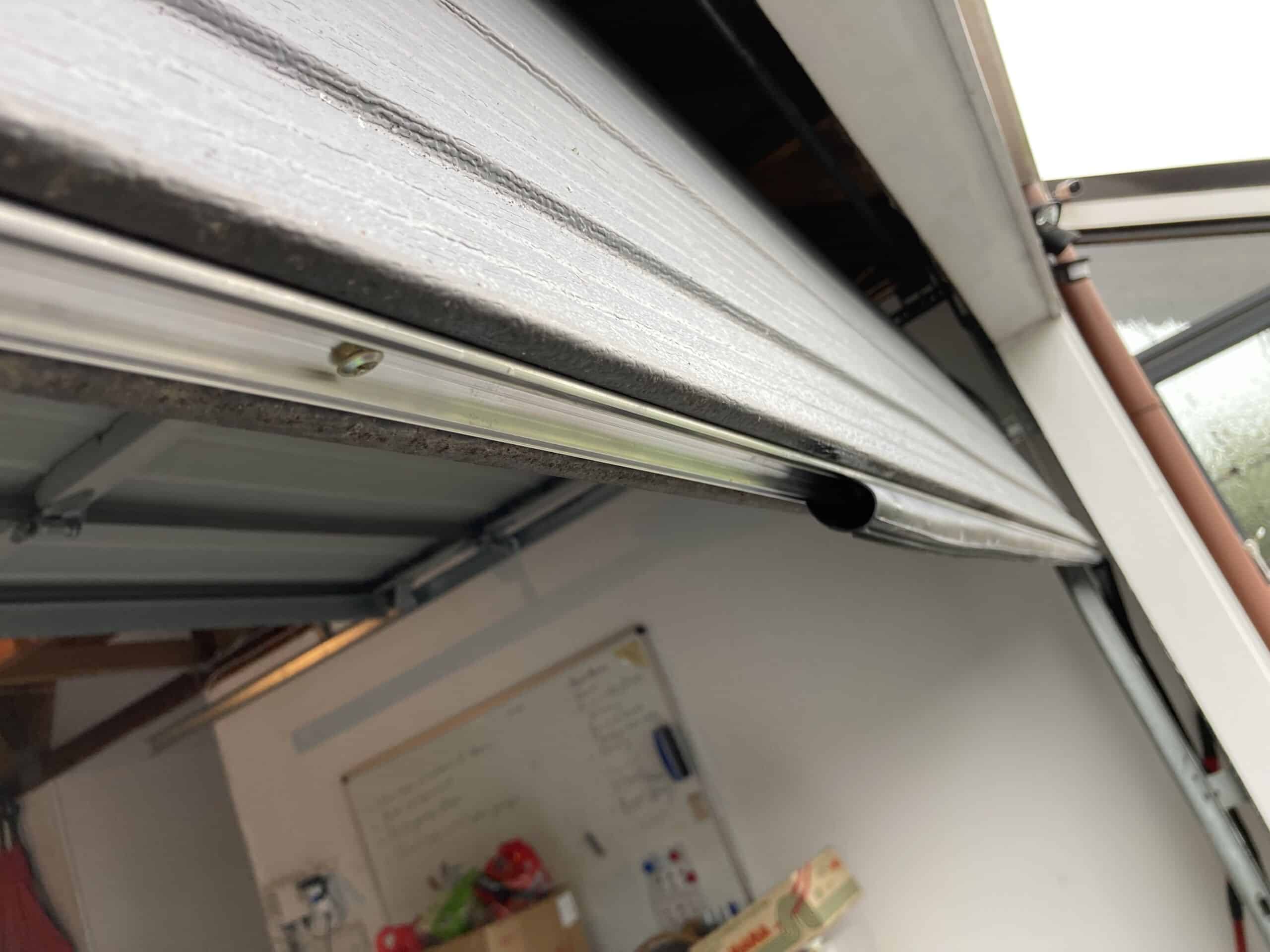
The guide rail holds the rubber seal in position along the bottom of the door. The rubber seal slides into or attaches to the rail, depending on the design.
Older guide rails were commonly made from plastic. Improved aluminium guide rails are now available and can offer greater rigidity and durability, depending on the design and installation.
However, not every aluminium rail is compatible with every garage door. The rail profile and the rubber seal must match the existing door system.
Finger-Safe vs Non-Finger-Safe Guide Rails
Garage door bottom guide rails come in different profiles. Two common types are known as finger-safe and non-finger-safe.
Finger-Safe Guide Rail
A finger-safe profile is shaped to reduce the risk of fingers becoming trapped in accessible gaps around the bottom edge of the door. Its profile is designed to fit into or around the bottom section of the door, depending on the particular system.
Non-Finger-Safe Guide Rail
A non-finger-safe guide rail generally has a flatter, simpler profile. Many older garage doors use this style of rail, although the exact shape can vary between manufacturers and door models.
When replacing a bottom seal, it is important to identify the existing rail profile before ordering parts. A rubber seal that looks similar may not slide into the existing rail correctly.
Where an older door uses a non-finger-safe rail, a compatible replacement may be the most straightforward option. An upgrade may also be possible, but compatibility, door construction and safety requirements should be checked first.
What Does the Bottom Rubber Seal Actually Do?
The bottom seal performs several useful functions:
- Helps reduce water ingress: It helps limit rainwater entering underneath the garage door, particularly when the door closes onto a reasonably level floor.
- Helps keep insects and debris out: It reduces gaps that may allow insects, leaves, dust and windblown debris to enter.
- Helps close floor gaps: The flexible rubber can accommodate small variations in the floor surface.
- Reduces draughts: It helps limit cold air and wind entering through the bottom gap.
- Can reduce rattling: A seal in good condition may cushion contact between the door and the floor.
It is important to understand that a bottom rubber seal is not a waterproof barrier. It cannot compensate for a significantly uneven floor, poor drainage, excessive gaps or water pressure against the door.
Why Should a Worn Bottom Seal Be Replaced?
A deteriorated seal may no longer make proper contact with the floor. This can leave visible gaps beneath the garage door, allowing water, insects, dust and draughts to enter.
If the rubber has become brittle or broken, it may also fail to stay securely in the guide rail. Replacing the seal helps restore its intended function and may prevent minor problems from becoming ongoing inconveniences.
Replacement is recommended when you notice:
- Cracks, splits or missing sections of rubber
- Rubber that has become hard and no longer compresses properly
- Gaps between the seal and the floor when the door is closed
- Water, leaves or insects entering beneath the door
- A seal that has slipped out of, or become loose in, the guide rail
If the guide rail itself is bent, cracked, corroded or damaged, replacing only the rubber may not solve the problem.
Can You Replace the Bottom Seal Yourself?
Some homeowners with suitable DIY skills may be able to replace a bottom rubber seal themselves. The process generally involves identifying the correct seal and rail profile, removing the old rubber, cleaning the guide rail, sliding or fitting the new seal into position, and checking that it sits evenly across the full width of the door.
However, the difficulty depends on the design of the door and guide rail. Older seals may be difficult to remove, and a long rubber seal can be awkward to feed through a rail without twisting or stretching it.
Before starting, make sure you have the correct replacement parts and understand how the door is secured. Do not work underneath an unsupported door or attempt to dismantle loaded spring, cable or bottom roller components. If the rail needs to be removed from the door, or the door must be raised or secured in an unfamiliar way, it is safer to have a garage door technician carry out the work.
If you are unsure which seal or guide rail your door uses, a technician can identify the correct profile and check the condition of the surrounding components.
Professional Replacement for a Better Fit
A correctly fitted bottom seal should run evenly along the full width of the door and make suitable contact with the floor without preventing the door from closing properly.
Choosing the right rubber profile and compatible guide rail is just as important as the quality of the replacement material. If your existing rail is damaged or unsuitable, replacing both components may provide a more reliable result.
If your garage door bottom seal is cracked, hard or no longer sealing properly, consider having it inspected and replaced. A relatively small maintenance job can help keep your garage cleaner, reduce draughts and limit the entry of rainwater and pests.
Contact a garage door technician if you need help identifying the correct bottom seal or guide rail for your door.