Tilt Door Spring Replacement
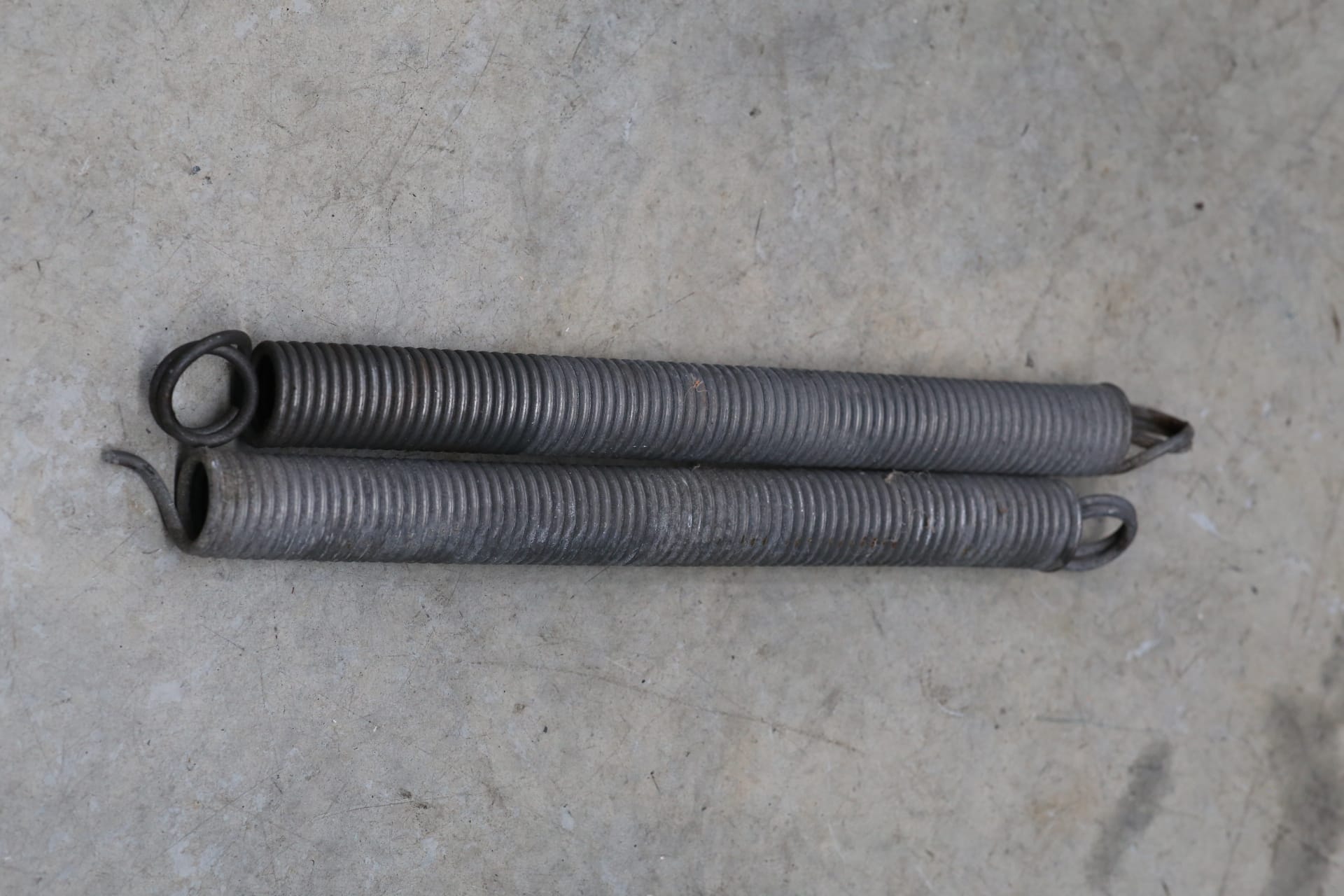
Tilt garage doors use tension springs to counterbalance the weight of the door and make the door easier to open and close. The correct spring size is important for the safe and reliable operation of the door.
At Eden Garage Doors, we commonly use 50 kg and 75 kg tilt door springs, although the correct spring specification depends on the actual door weight, construction, spring configuration and existing hardware.
Standard Tilt Door Spring Sizes
| Spring Rating | Wire Diameter | Outside Diameter | Body Length* |
| 50 kg | 5.3 mm | 43 mm | 440 mm |
| 75 kg | 6.3 mm | 48 mm | 558 mm |
* Body length is measured with the spring fully relaxed and excludes the loops or hooks at either end.
These are commonly used standard sizes, but not every garage door uses the same spring specification. Older doors, custom-built doors and doors that have previously been modified may use different wire sizes, outside diameters, spring lengths or spring combinations.
How to Measure a Tilt Door Tension Spring
If you are trying to identify an existing spring, the following measurements are important.
- Measure the Spring Body Length
Measure the spring after it has been removed and completely relaxed.
Measure only the coiled body of the spring and exclude the loops, hooks or fittings at either end.
This is the spring’s working body length.
- Measure the Wire Diameter
Use a vernier caliper or micrometer to measure the diameter of the spring wire.
If a suitable measuring tool is not available, the wire diameter can be estimated by measuring across 10 coils and dividing the measurement by 10.
For example:
10 coils = 53 mm → 53 ÷ 10 = 5.3 mm wire diameter
Accurate measurement is important because even a relatively small difference in wire diameter can significantly change the spring’s lifting capacity.
- Measure the Outside Diameter
Measure the complete outside diameter of the spring, including the thickness of the wire.
This is measured from the outside edge of one side of the coil to the outside edge of the opposite side.
Use the Correct Measuring Tools
For accurate identification, we recommend:
- Tape measure – for spring body length
- Vernier caliper – for wire diameter and outside diameter
- Micrometer – where a more precise wire measurement is required
Why Spring Length Alone Is Not Enough
For older garage doors, the original spring may not match today’s standard spring sizes.
Two springs can have a similar body length but have completely different lifting characteristics because of differences in:
- Wire diameter
- Outside diameter
- Body length
- Number of coils
- Spring configuration
- Number of springs used
- Door weight
- Door construction and frame
- Hook and mounting configuration
For this reason, simply purchasing a spring with the same overall length does not guarantee that it is the correct replacement spring.
The spring must be matched to the door’s actual weight and operating characteristics.
How Do I Know Which Tilt Door Spring I Need?
As a general guide, the following configurations are commonly seen:
| Door Type | Typical Spring Configuration |
| Colorsteel single | 50 kg × 1 each side |
| Colorsteel double | 75 kg × 1 each side |
| Cedar single | 75 kg × 1 each side |
| Cedar double – standard construction | 75 kg × 1 each side |
| Cedar with metal frame – semi-heavy | 50 kg × 2 each side |
| Cedar with metal frame – very heavy | 75 kg × 2 each side |
These are general guidelines only. The correct spring configuration can vary depending on the actual door weight, frame construction, door dimensions, existing spring setup and previous modifications.
Not sure which spring you need?
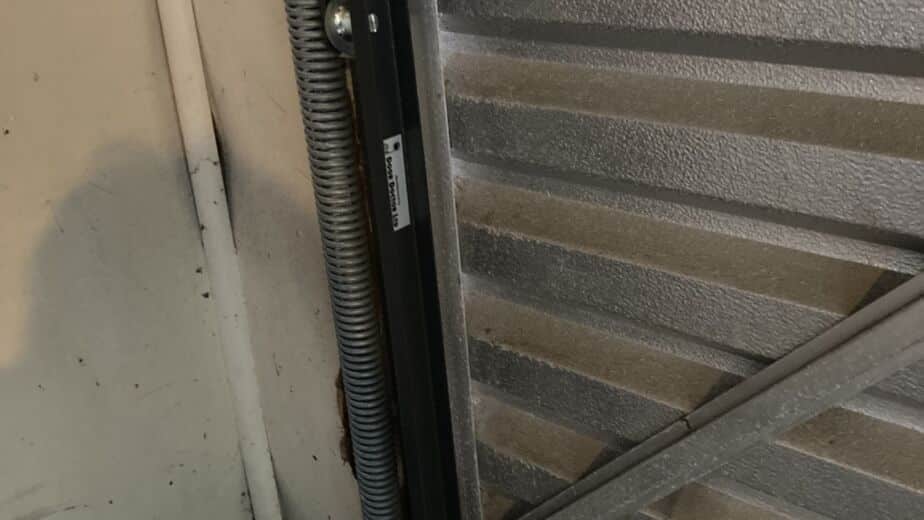
The easiest and safest option is to send Eden Garage Doors a clear photo of your garage door and spring arrangement.
Our technician can assess the door construction and existing spring setup and help determine the appropriate replacement spring specification.
Replacing Tilt Door Springs
Tilt door springs are installed under tension and can store a significant amount of energy. Incorrect removal, installation or adjustment can cause the spring, hook, bolt or other components to move suddenly and can result in serious injury or damage to the door.
For this reason, tilt door spring replacement and tension adjustment should be carried out by an experienced garage door technician.
The general replacement process involves:
- Position the Door Safely
The door is positioned in the appropriate open position so that the spring tension is reduced as much as possible before the spring assembly is worked on.
A broken spring can make the door extremely heavy and difficult to move safely. The door should not be forced or manually lifted without proper support and assessment.
- Secure the Door
Before removing or replacing springs, the door must be securely supported and prevented from moving unexpectedly.
The garage door must never be relied upon to remain in position simply because the opener is engaged.
- Remove and Replace the Springs
The existing spring assembly is inspected and the appropriate replacement springs are installed.
Where one spring has broken, we generally recommend replacing the springs on both sides at the same time.
Springs on the same door normally have a similar service life. Replacing only one side can result in different spring performance between the two sides and may lead to uneven door movement.
- Set the Correct Spring Tension
Once the replacement springs are installed, the spring tension must be adjusted to suit the actual weight and balance of the door.
This is one of the most important parts of the job.
The objective is not simply to make the door easy to lift. The spring tension must provide the correct counterbalance throughout the door’s travel while allowing the door to operate safely with its opener.
- Check Door Balance
The door should be tested manually and its movement and balance checked through its travel.
A correctly balanced door should not:
- Drop suddenly under its own weight
- Require excessive force to open
- Rise unexpectedly
- Become significantly heavier on one side
- Pull or twist unevenly
If the door is difficult to control manually, the spring tension or another part of the door mechanism may require adjustment.
- Test the Garage Door Opener
After the spring replacement and balance adjustment, the opener can be tested.
The technician should also check:
- Opening and closing operation
- Door travel
- Door balance
- Side cables
- Rollers and tracks
- Spring mounting points
- Hinges and brackets
- Opener operation and force settings
If necessary, the opener may require a reset or travel-limit adjustment after the door balance has been corrected.
How Do You Know If the Spring Tension Is Correct?
The door should operate smoothly and remain reasonably well balanced throughout its travel.
Spring tension may be too high if:
- The door is difficult to close
- The door tends to rise when released
- Excessive resistance is felt when lowering the door
- The opener appears to be working against excessive spring force
Spring tension may be too low if:
- The door becomes very heavy
- The door drops quickly when being lowered
- The opener struggles to lift the door
- The door does not remain reasonably balanced
- The lifting cables become loose or do not remain correctly positioned
Spring tension should not be adjusted by trial and error.
The correct tension depends on the door’s actual weight, spring configuration and mechanical setup. Incorrect adjustment can place excessive load on the springs, cables, tracks, brackets and garage door opener.
If the door is too heavy, too light, rises by itself or drops unexpectedly after a spring replacement, stop using the door and have the spring tension checked by a qualified garage door technician.
Why We Recommend Replacing Both Springs
When one spring breaks, the other spring has normally undergone a similar number of operating cycles.
Replacing only the broken spring may result in:
- Unequal spring performance
- Uneven door movement
- Different tension between the two sides
- The second spring failing shortly afterwards
For this reason, we generally recommend replacing both sides together where the door uses a matching pair of springs.
This also provides a more consistent balance across the door.
Need the Correct Tilt Door Springs?
If you are unsure which springs your garage door requires, send Eden Garage Doors a clear photo of the front of the door and the existing spring arrangement.
Where possible, include photos showing:
- The complete garage door
- Both sides of the door
- The existing springs
- Spring mounting points
- Side cables and brackets
- The garage door opener
Our technician can assess the door and help determine the appropriate spring type and configuration.
Do not attempt to remove or adjust a tension spring while it is under load.
For tilt door spring replacement, adjustment and safety checks, contact Eden Garage Doors.