Tilt Garage Door Power Arms: What They Do, Signs of Wear and When to Replace Them
A tilt garage door relies on a system of springs, hinges and lifting arms to open and close smoothly. One important component in this system is the power arm, which helps guide and control the movement of the door.
Over time, power arms can wear, bend or develop excessive movement at their pivot points. When this happens, the door may become noisy, move unevenly or place additional stress on other components.
Understanding how power arms work and recognising the signs of wear can help prevent further damage and keep your garage door operating safely.
- What Is a Tilt Garage Door Power Arm?
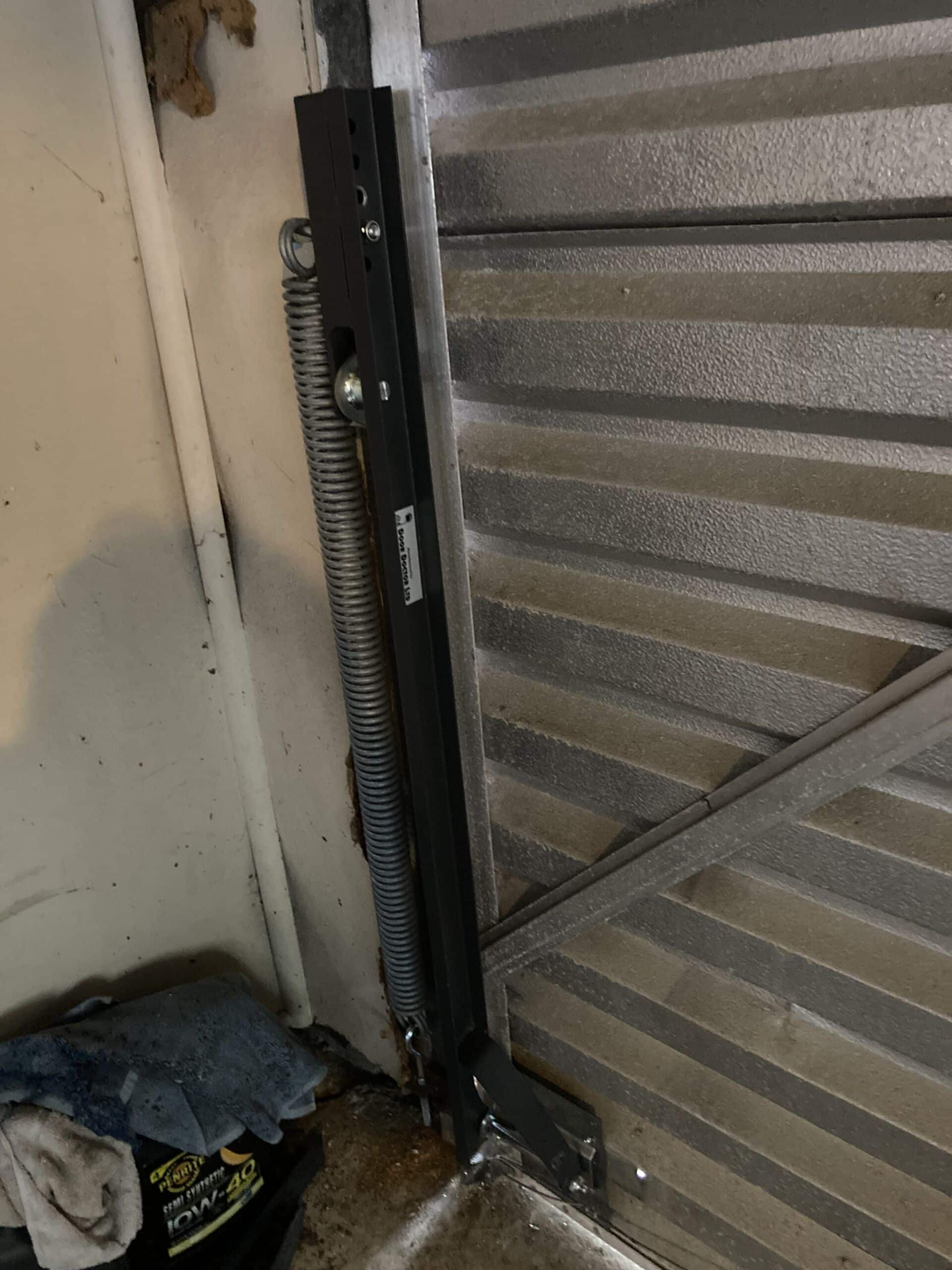
A power arm is a metal linkage fitted to certain tilt garage door systems. It connects the door to the operating mechanism and helps guide the door through its opening and closing movement.
Depending on the door design, the power arm works with the springs, brackets and other pivoting components to control the door’s movement.
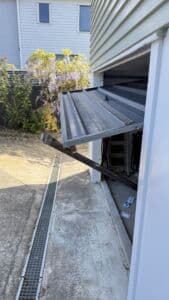
When the door opens, the power arm changes position as the door pivots outwards and upwards. When the door closes, it guides the door back into its closed position.
A properly functioning power arm helps the door move smoothly and maintain the correct movement throughout its operating cycle.
Important: Power arm designs vary between tilt door systems. Some arms are part of the door’s lifting mechanism, while others are associated with the automatic opener. The correct replacement depends on the specific door and mechanism.
- What Happens When a Power Arm Becomes Worn?
Power arms experience repeated movement every time the garage door is operated. After years of use, wear can develop at the joints, pivot holes, pins and mounting points.
The following are common warning signs.
2.1 The Garage Door Moves Unevenly
Symptoms: One side of the door appears to move differently from the other, or the door does not follow its usual opening path.
A worn or damaged power arm may no longer guide the door correctly. Excessive movement at a joint or a bent arm can alter the door’s movement.
However, uneven movement can also be caused by spring problems, loose brackets or other damaged components.
What to do: Stop using the door if it becomes significantly uneven or appears unstable. Arrange a professional inspection to identify the cause before further operation.
2.2 The Door Makes Clunking or Knocking Noises
Symptoms: A metallic clunk, knock or rattle occurs as the door starts moving, changes direction or reaches a particular point in its travel.
This can happen when a worn pivot point allows the arm to move excessively. A loose pin, worn mounting hole or damaged bracket may also allow metal components to strike one another.
What to do: A technician should inspect the arm, pivot pins, bolts and mounting brackets. Tightening a loose fastener may help if the parts are undamaged, but worn joints or elongated mounting holes may require replacement.
2.3 The Power Arm Is Bent or Visibly Damaged
Symptoms: The arm appears twisted, bent, cracked or unusually worn around a joint.
A bent arm may no longer move through its intended path. This can affect the door’s alignment and increase the load on other parts of the mechanism.
Damage may result from age, corrosion, impact or a door that has been forced while obstructed or incorrectly balanced.
What to do: A visibly bent or cracked power arm should be replaced rather than straightened and reused. The technician should also check for the underlying cause of the damage.
2.4 Excessive Movement at the Joints
Symptoms: The arm or its pivot points move more than expected, or there is noticeable play when the mechanism changes direction.
Pivot holes can gradually become enlarged, while pins and bushes may wear down. This can make the mechanism less precise and create additional noise.
What to do: Have the joints inspected for wear. Replacing a worn pin or bush may be sufficient on some systems, while others require replacement of the complete power arm assembly.
2.5 The Automatic Opener Struggles to Move the Door
Symptoms: The opener sounds louder than usual, the door hesitates, or the system stops before completing its travel.
A worn or misaligned power arm can increase resistance or interfere with the door’s intended movement. The opener may then experience additional strain.
However, these symptoms can also be caused by poor door balance, failing springs, an obstructed mechanism or an opener fault.
What to do: Do not assume that the opener itself is defective. A technician should first establish whether the door and its operating mechanism move correctly before deciding whether the opener requires repair or replacement.
- When Should a Tilt Door Power Arm Be Replaced?
There is no single replacement interval that applies to every tilt door. The correct timing depends on the door design, frequency of use, environmental conditions and the condition of the mechanism.
Power arms should be replaced when inspection identifies any of the following:
- Cracks, bending or other structural damage.
- Significant corrosion that compromises the metal.
- Excessive wear at pivot holes, pins or bushes.
- Loose or damaged connections that cannot be securely repaired.
- Deformation that prevents the arm from following its intended movement.
- Repeated knocking or abnormal movement caused by worn arm components.
Replacement may also be appropriate when a technician identifies substantial wear during routine servicing, even if the arm has not yet failed completely.
There is no need to replace a sound power arm solely because the door is old. Its actual condition and the manufacturer’s requirements should guide the decision.
- Why Is Replacing a Worn Power Arm Important?
Protect Other Garage Door Components
A worn arm can alter the movement of the door and place additional stress on pivot points, brackets, springs and the automatic opener.
Replacing a damaged component can help prevent unnecessary wear elsewhere in the system.
Maintain Smooth and Reliable Operation
A correctly fitted power arm helps the door follow its intended movement. Replacing a worn or distorted arm can eliminate play, reduce knocking and restore more consistent operation when the arm is confirmed as the source of the problem.
Reduce the Risk of Further Damage
A severely worn or damaged arm may eventually deform further or fail. If this occurs while the door is moving, the door may become unstable or stop in an unexpected position.
Timely replacement helps reduce this risk, although the entire door mechanism must also be inspected to ensure it is operating safely.
Avoid Repeated Repair Costs
Lubrication or tightening may temporarily reduce noise, but these measures cannot restore metal that has worn away or repair a cracked arm.
Replacing a worn component is often more effective than repeatedly attempting temporary fixes.
- Can You Replace a Tilt Door Power Arm Yourself?
For most homeowners, professional replacement is the safer option.
Tilt garage doors can be heavy, and their spring systems store substantial energy. Removing or disconnecting a power arm without correctly securing the door can cause sudden movement or release stored energy.
A qualified garage door technician can:
- Identify the correct power arm for the door system.
- Secure the door and manage the relevant spring forces safely.
- Inspect the arm, pins, bushes, brackets and associated components.
- Replace the worn part using the correct hardware.
- Check the door’s balance, alignment and full range of movement.
- Test the automatic opener and safety functions where fitted.
Homeowners can visually inspect accessible components from a safe position, but should not disconnect the arm, loosen spring-loaded fittings or operate a damaged door to investigate the problem.
- Power Arm Replacement: Repair or Replace?
Not every noisy power arm needs to be replaced as a complete assembly.
If the arm itself is structurally sound and the manufacturer provides suitable replacement pins or bushes, repairing the worn joint may be possible.
However, replacement of the complete arm is generally preferable when it is bent, cracked, significantly corroded or worn around its mounting holes.
The decision should also consider the availability of genuine or compatible parts and the overall condition of the tilt door mechanism.
Final Thoughts
The power arm is an important part of many tilt garage door systems. Although it may appear to be a simple metal component, its condition can affect how smoothly and reliably the door operates.
Clunking noises, excessive movement, visible bending and uneven door travel are all reasons to have the mechanism inspected.
Replacing a worn or damaged power arm at the right time can help protect other components, restore smooth operation and reduce the risk of further damage.
If your tilt garage door has become noisy, moves unevenly or shows signs of wear around the lifting arms, arrange a professional inspection to determine whether the power arm or another part of the mechanism requires attention.