How to Replace Side Rollers and Hinges on a Sectional Garage Door
Replacing a worn side roller or hinge on a sectional garage door can be a relatively simple DIY job — if you know which parts are safe to remove and which parts must never be touched.
One of the most important safety rules is:
You can replace a normal side hinge and roller, but NEVER remove the bottom roller bracket.
The bottom roller bracket is completely different from the ordinary hinges higher up the door.
It is connected to the garage door’s high-tension side cable system, and removing it can release stored tension and cause serious injury.
Here is the simple way to understand the difference.
First: Understand the Different Rollers and Hinges
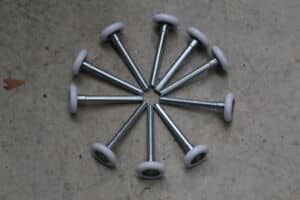
A typical sectional garage door has several rollers running inside the tracks.
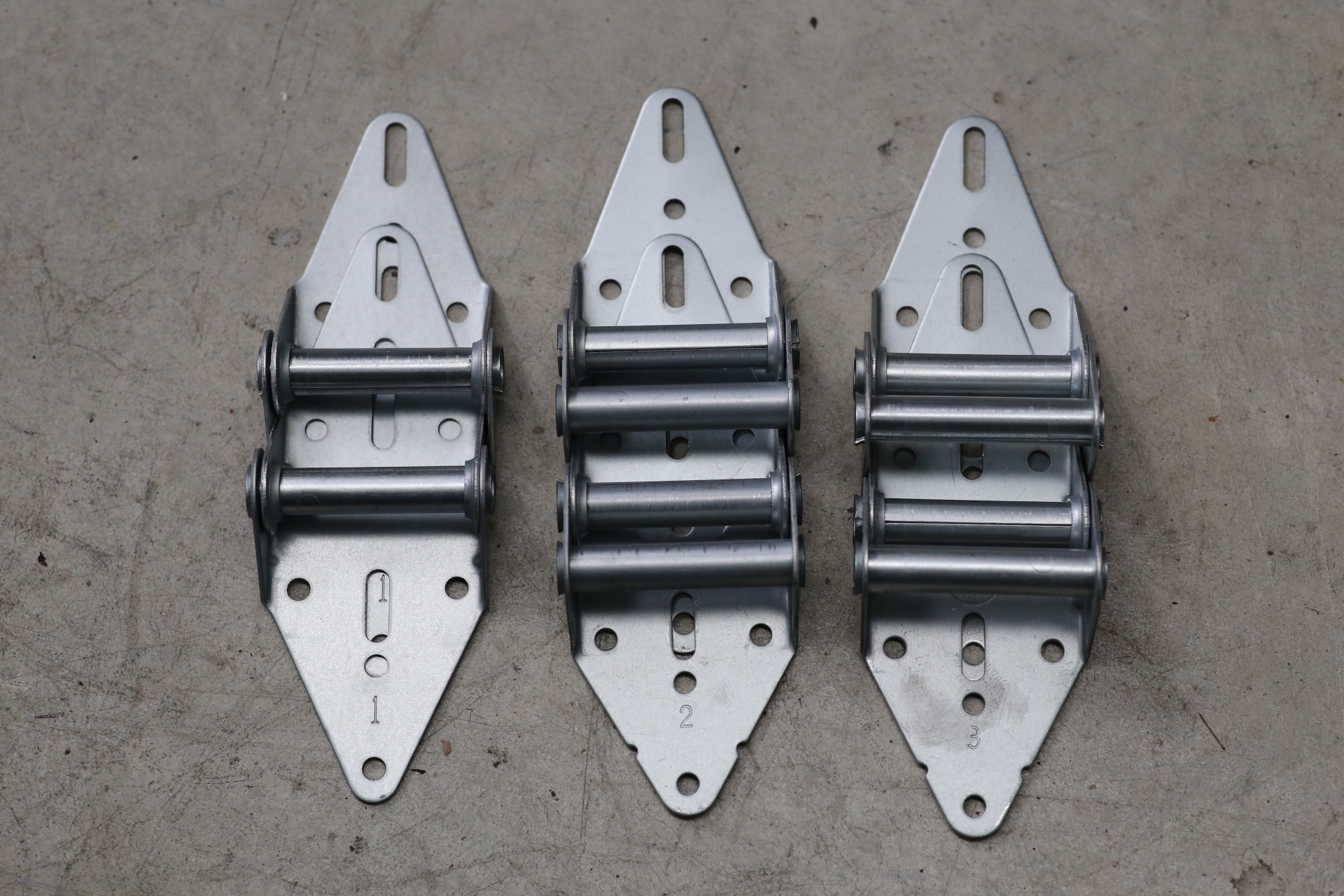
The rollers are held in position by brackets or hinges attached to the door panels.
The hinges higher up the door are generally straightforward mechanical components.
However, the bottom roller bracket is different.
It is connected to the side lifting cable, which is under significant spring tension.
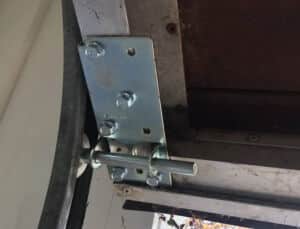
This is the part you must NOT remove.
Bottom roller bracket = DO NOT TOUCH
Replacing a Normal Side Roller and Hinge
If you are replacing a normal side roller/hinge located on one of the upper door sections, the basic process is very simple.
Step 1 — Disconnect the Garage Door Opener
Before working on the door, disconnect the automatic opener.
This prevents the opener from accidentally operating while you are working on the door.
If possible, keep the remote control somewhere away from the work area so nobody accidentally activates the door.
Step 2 — Identify the Hinge You Want to Replace
Look at the hinge holding the roller on the side of the door section.
The roller sits inside the track, while the hinge is screwed to the garage door panel.
The roller itself is usually held by the hinge.
Step 3 — Remove the Hinge Screws
Using the appropriate screwdriver or socket, carefully remove the screws securing the normal side hinge to the door panel.
Once the screws are removed, the hinge can be taken away from the door.
The roller will normally come away with the hinge.
In simple terms:
Remove screws → remove old hinge + roller
That’s it.
Step 4 — Fit the New Roller and Hinge
Take the replacement roller and place it into the new hinge.
Position the new hinge in the same location as the old one.
Then reinstall the screws into the original mounting holes.
In simple terms:
New roller + new hinge → position → reinstall screws
Make sure the hinge is sitting correctly and the roller is positioned properly inside the track.
Step 5 — Check the Door Movement
Once the new hinge and roller are installed, manually move the door carefully and check that the roller travels smoothly inside the track.
Look for:
- Smooth movement
- Correct roller position
- No rubbing
- No unusual noise
- No obvious movement of the hinge
If everything looks correct, reconnect the opener and test the door carefully.
⚠ THE MOST IMPORTANT SAFETY RULE
NEVER REMOVE THE BOTTOM ROLLER BRACKET
This is the part that must be clearly understood.
The bottom roller bracket is not just another hinge.
It is connected to the garage door’s side lifting cable.
That cable is under significant tension from the garage door spring system.
The bottom bracket is therefore part of the system that controls and transfers the lifting force of the door.
Removing the bottom bracket can release stored energy.
If the bracket is removed while the cable is under tension, the cable and bracket can move suddenly and violently.
This can result in:
- Serious hand injuries
- Serious cuts
- Broken fingers
- Impact injuries
- Damage to the door
- Damage to the track
- The door becoming unstable
For this reason:
DO NOT loosen, remove or adjust the bottom roller bracket yourself.
How Can You Tell Which One Is the Bottom Bracket?
The bottom roller bracket is normally located at the bottom corner of the lowest garage door panel.
You will usually see the side cable connected to or running through this bracket.
If you see the lifting cable attached to the bracket:
STOP. DO NOT REMOVE IT.
That is not a normal DIY hinge replacement.
Normal Hinge vs Bottom Roller Bracket
| Normal Side Hinge | Bottom Roller Bracket | |
| Location | Higher door sections | Bottom corners |
| Holds roller | Yes | Yes |
| Attached to door panel | Yes | Yes |
| Connected to lifting cable | Usually no | Yes |
| Spring tension involved | No direct high tension | Yes |
| DIY replacement | Generally straightforward | DO NOT DIY |
| Safety risk if removed | Relatively low | Potentially very serious |
Why Is the Bottom Bracket So Important?
A sectional garage door is not simply a collection of panels moving along tracks.
The door is counterbalanced by a spring system.
The springs store energy and use that energy through the cables and hardware to make the heavy door manageable.
The bottom roller bracket is one of the components involved in transferring this force.
That’s why it should never be treated like an ordinary hinge.
Think of it this way:
Normal side hinge
Screws → hinge → roller
Relatively simple.
Bottom bracket
Spring → cable → bottom bracket → door
High stored energy.
That is why the two components may look similar but require completely different approaches.
What If the Bottom Roller Is Worn Out?
This is where you should stop the DIY job.
If the roller at the bottom of the door is worn, noisy or damaged, do not remove the bottom bracket just to replace the roller.
Contact a garage door professional.
They have the correct procedures and tools to safely deal with the cable tension and bottom bracket.
A Simple Rule to Remember
If you only remember one thing from this article, remember this:
🟢 NORMAL SIDE HINGE
Unscrew → remove hinge + roller → install new hinge + roller → screw back in
🔴 BOTTOM ROLLER BRACKET
DO NOT UNSCREW IT.
DO NOT REMOVE IT.
DO NOT ADJUST IT.
Leave it to a qualified garage door technician.
DIY Garage Door Repairs: Know Your Limits
Replacing a normal side hinge or roller can be a simple maintenance job for someone who is comfortable using basic tools.
But garage doors contain components under significant stored tension.
The important thing is not to assume that every roller and hinge is the same.
Before removing anything, identify exactly what you are working on.
If it is a normal side hinge, replacement can be relatively straightforward.
If it is the bottom roller bracket connected to the side cable, stop and call a professional.
A few minutes of caution can prevent a very serious accident.
When in doubt, don’t remove it. Get it checked first.